
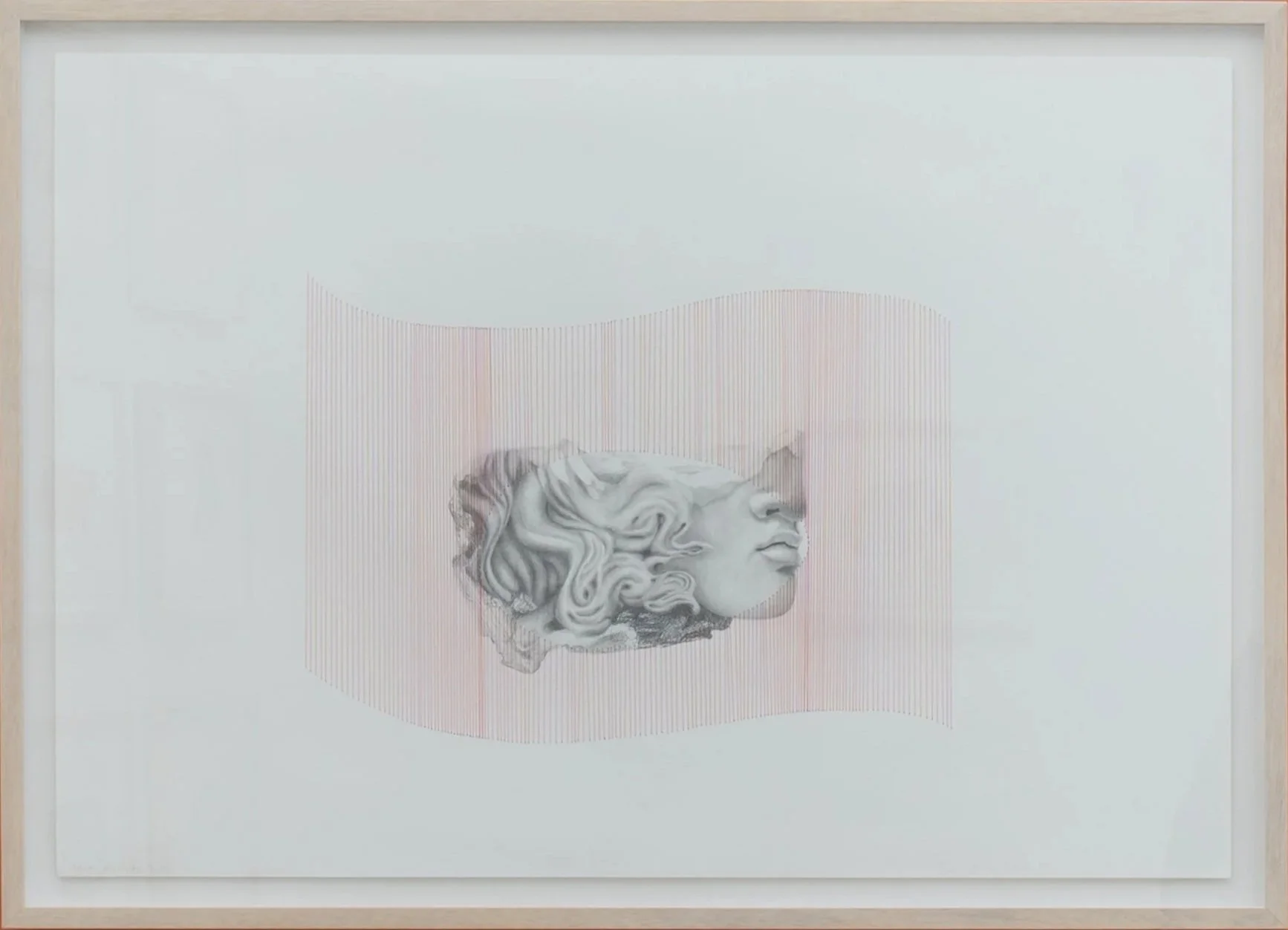
Gone with the Wind, Nechmad, 2025, Graphite and Embroidery on Paper, 27.5 x 39 in
Untitled miami beach 2025
dana nechmad
booth c46
KALINER is pleased to invite you to a solo presentation of a new body of work by artist Dana Nechmad, presented at the Untitled Miami Art Fair. Titled The Braided Mythology, the exhibition explores the ways in which our very core conceptions, which include notions such as self and gender, are first constructed and then embodied through artifacts and stories.
Taking as her starting point ancient Greek and Roman sculpture; the artist uses these fragmented findings, broken myths and patched up histories to piece together her own mythology. Hers is not a solid, monolithic, seemingly linear series of stories and events linking the now with the then, the son with the father, one empire to another - instead, Nechmad presents us with a vulnerable, ambiguous and fragmented body of knowledge, evoking not certainty but ambiguity, not logic but emotion.
Working in drawing, textile and embroidery, Nechmad uses techniques which allow for no leeway; the needle holes can not be filled, the bleach cannot be undone, the marks cannot be erased from the pristine paper. The results are both intimate and bold, inviting the viewer to a closer inspection of the materiality (and corporeality) of the pieces and themes on display.
The exhibition consists of four chapters: The Braided Mythology, Fragile (Freedom) Victory, Harmony?, and Gone with the Wind.
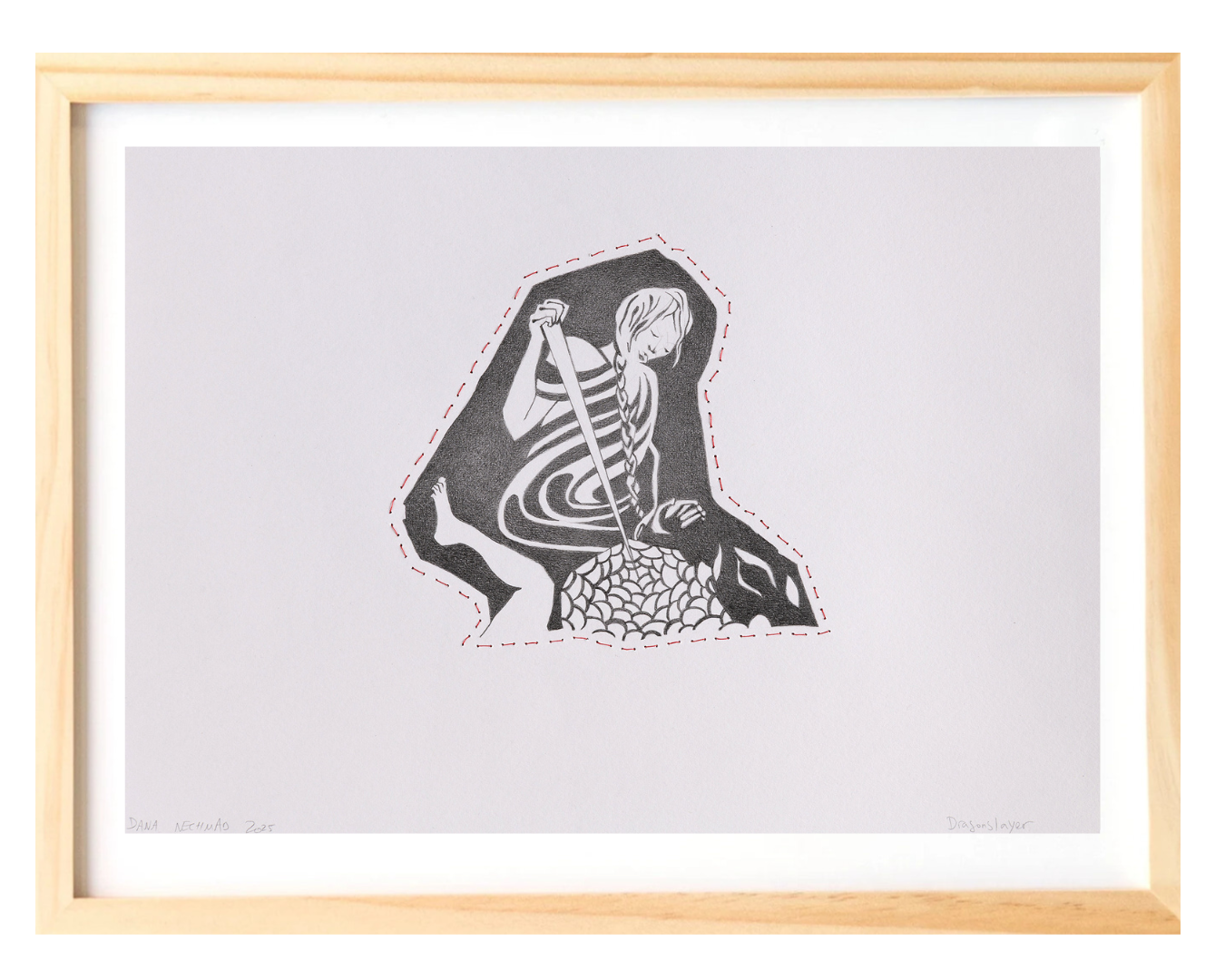
Baird, Dragonslayer, 2025, Graphite and Embroidery on Paper, 11.42 x 16.54 in, $2,700
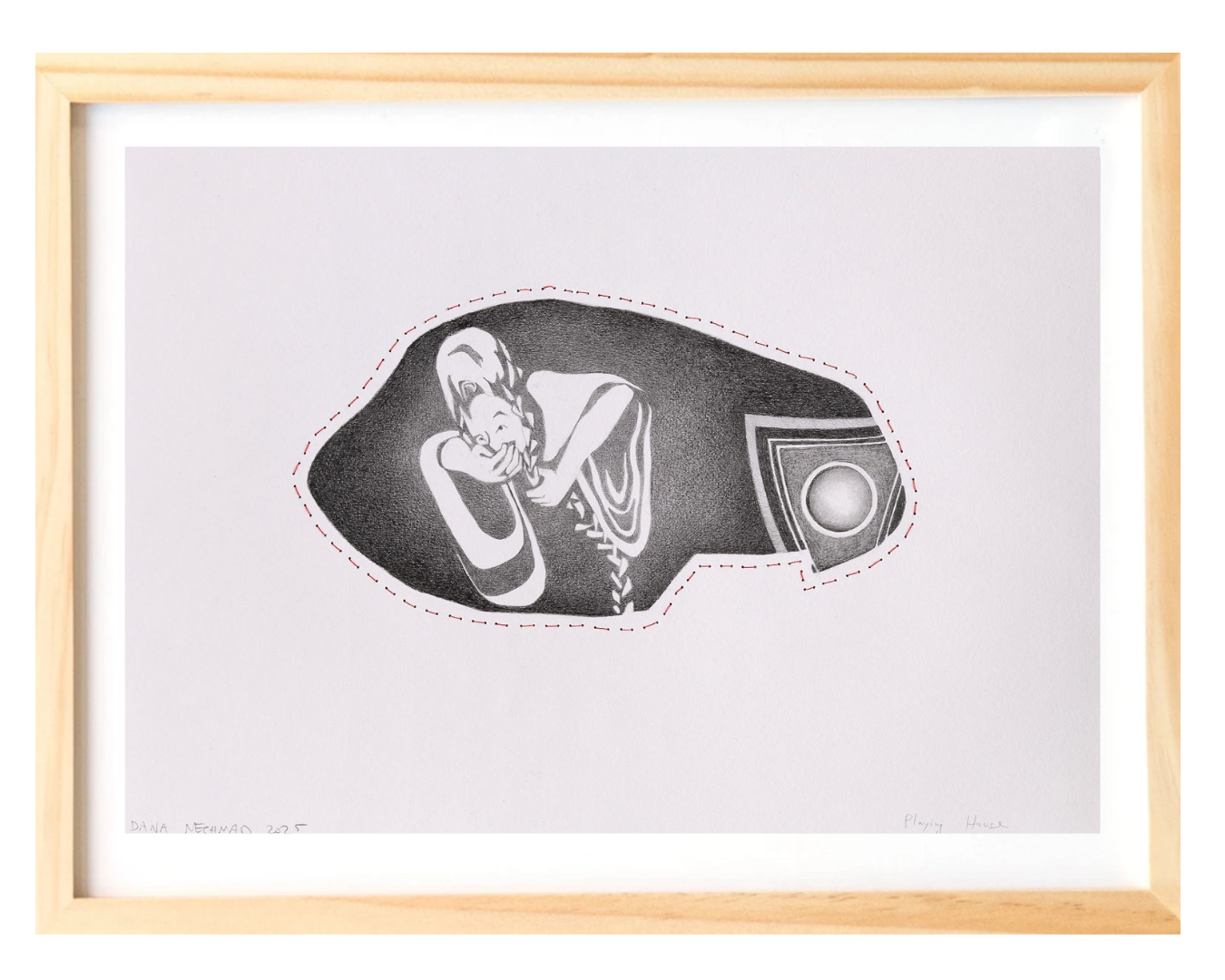
Baird, Playing House, 2025, Graphite and Embroidery on Paper, 11.42 x 16.54 in, $2,700
Composing its own odyssey, The Braided Mythology (a grid consisting of sixteen works on paper) depicts a woman with braided hair as she undergoes a series of trials and tribulations. The figure is depicted in non-spaces that evoke cave paintings or Greek vases, simultaneously flat and dimensional. Acting like peepholes, these settings reveal unseen, private moments of struggle, lust, longing, confusion, anger and fantasy.
Combining both textile and drawing, the work moves between abstraction and figuration. With the abstracted textile pieces functioning as wounds, bringing the body itself to the forefront. The story here is told viscerally, reminding us that flesh and materiality are inseparable from emotional experience.
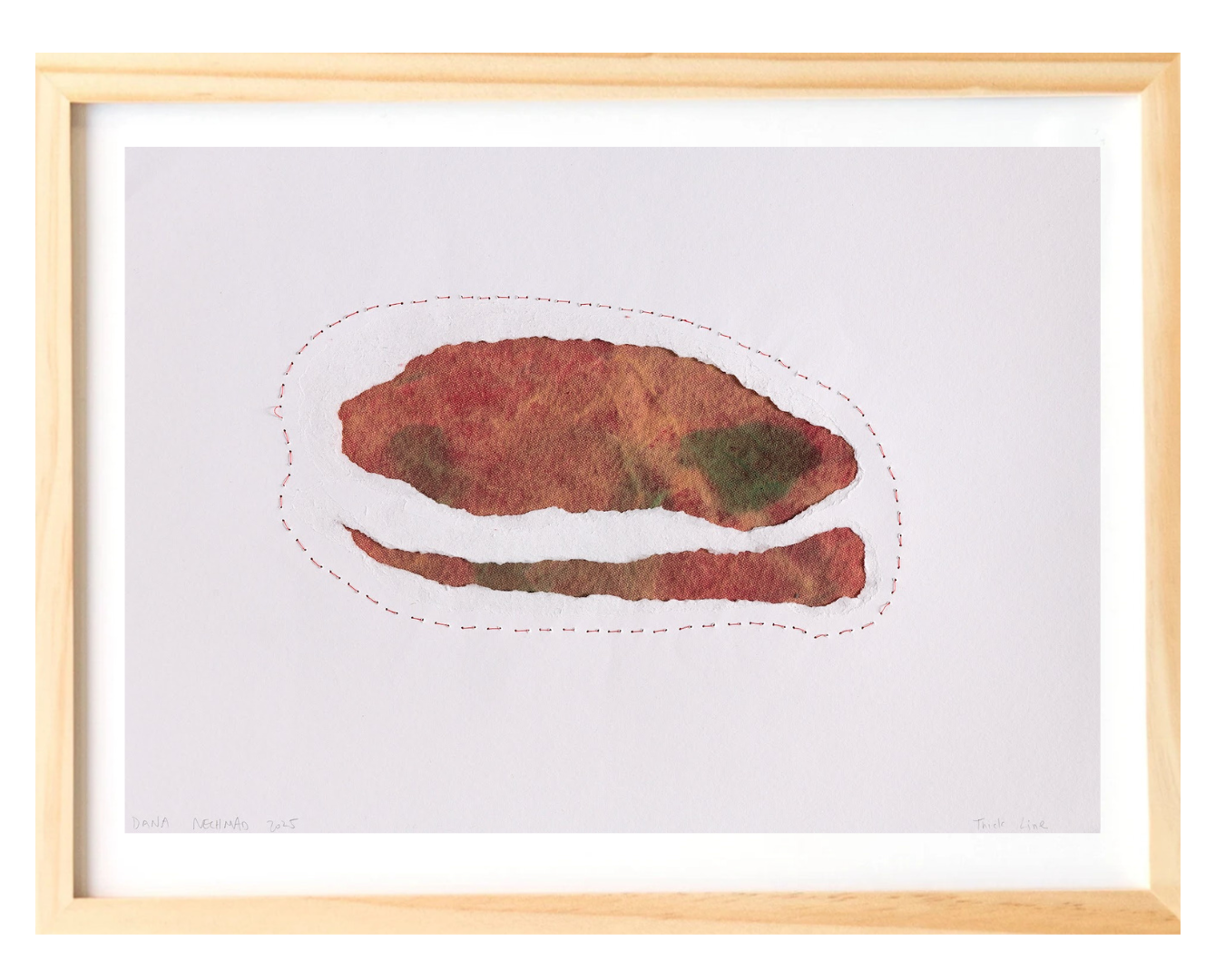
Baird, Thick Line, 2025, Graphite and Embroidery on Paper, 11.42 x 16.54 in, $2,700
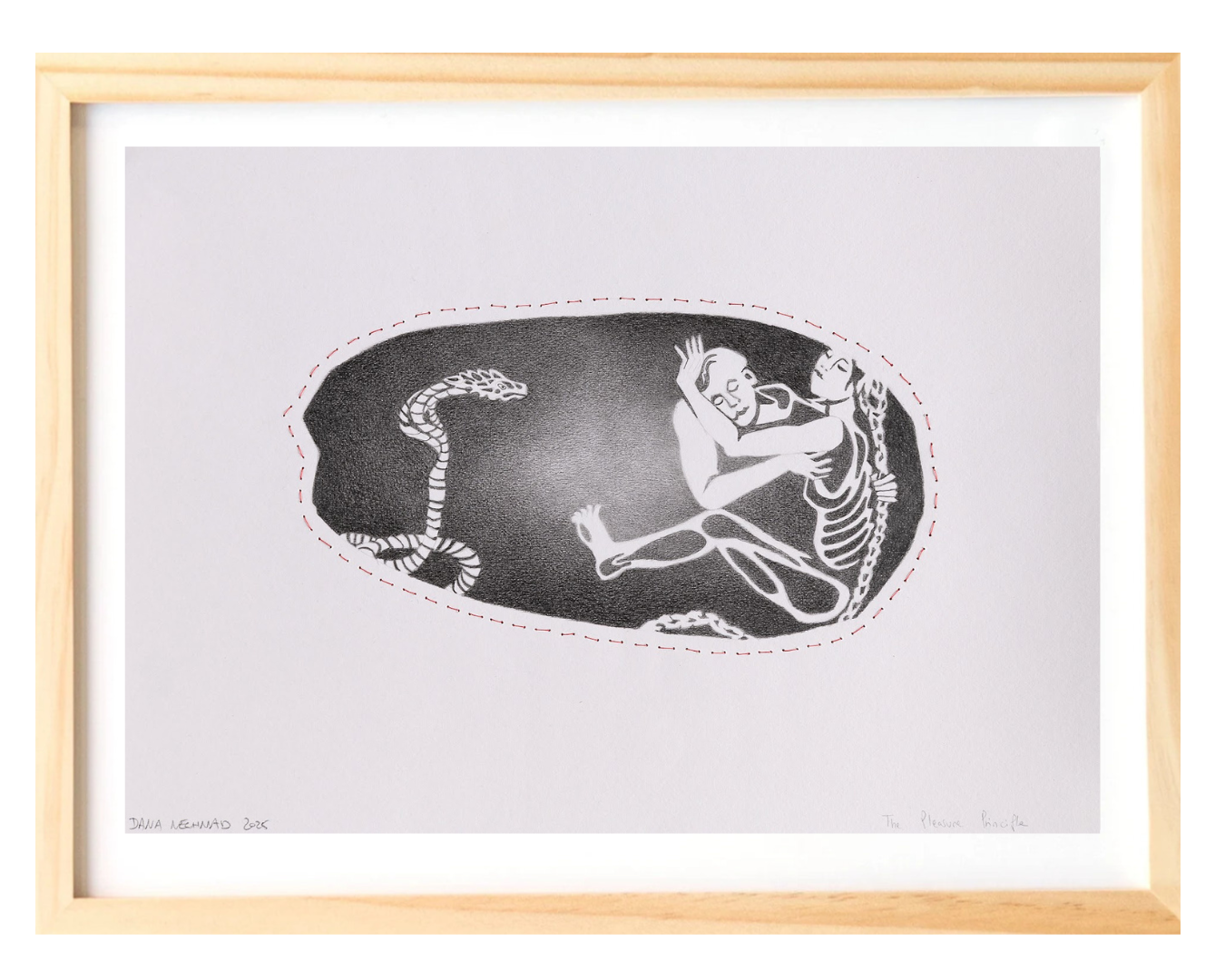
Baird, The Pleasure Palace, 2025, Graphite and Embroidery on Paper, 11.42 x 16.54 in, $2,700
The source material for Fragile (Freedom) Victory work is the Hellenistic Nike known as the Winged Victory of Samothrace—a marble masterpiece from around 190 BCE, pulled from the Aegean Sea in 1863 and brought to Paris, where it remains. There's a bitter irony here: the winged goddess, found broken and vulnerable at sea, stripped of her powers, was carried as prisoner to foreign land, displayed as stolen war treasure. In the drawing we see Nike's left wing, amputated and wrapped in embroidered netting.
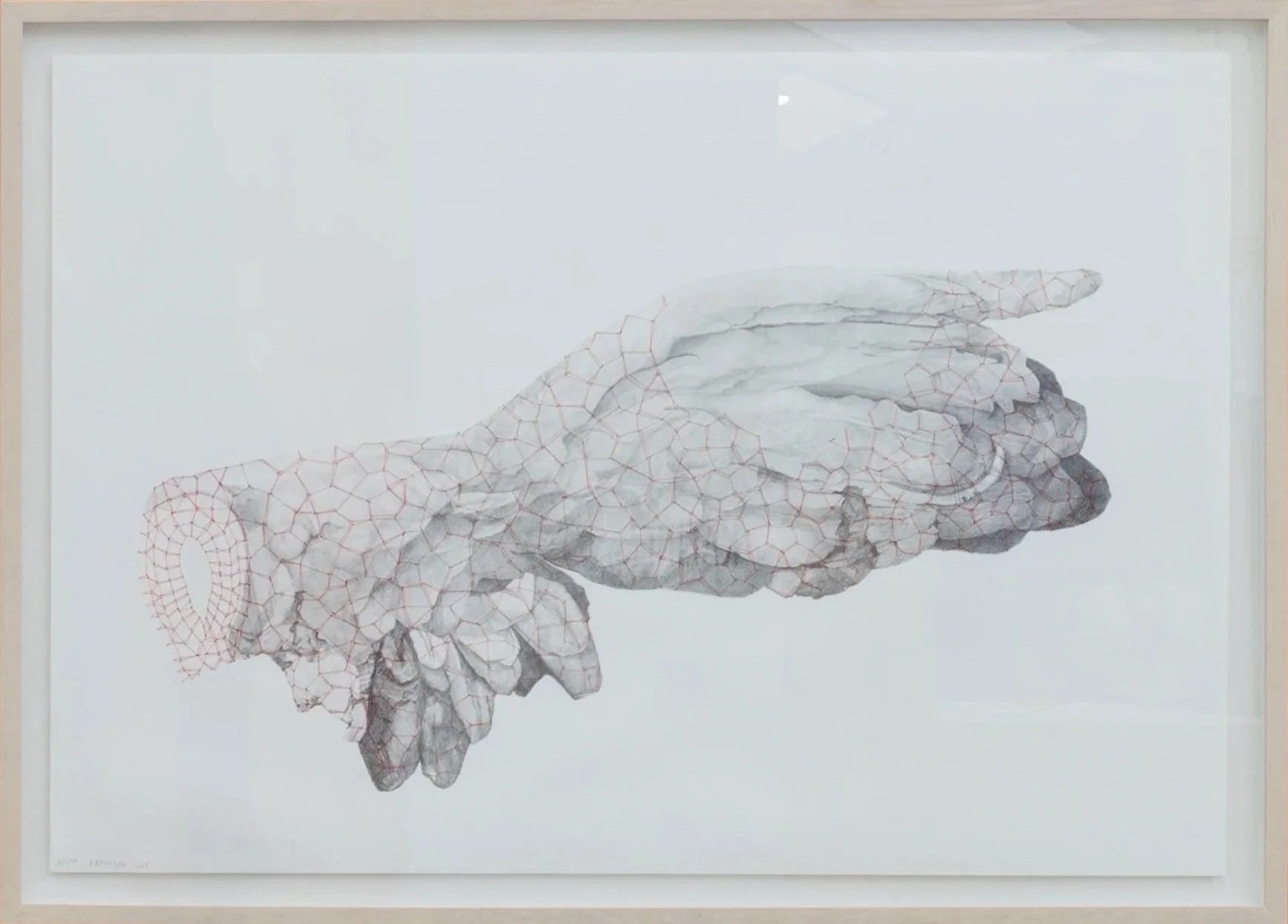
Baird, Fragile (Freedom) Victory, 2025, Graphite and Embroidery on Paper, 27.5 x 39.37 in, $6,200
In Harmony? the canvas is submerged in deep dye for an extended period, then stretched across the floor. Working quickly with bleach, the artist reveals larger-than-life figures from within the fabric itself—a form of removal that paradoxically creates a positive presence, like a double negative. At first glance, the figures revealed suggest the form of yin and yang, but closer attention shows the female body is twice the size of the male—the power dynamic is anything but equal.
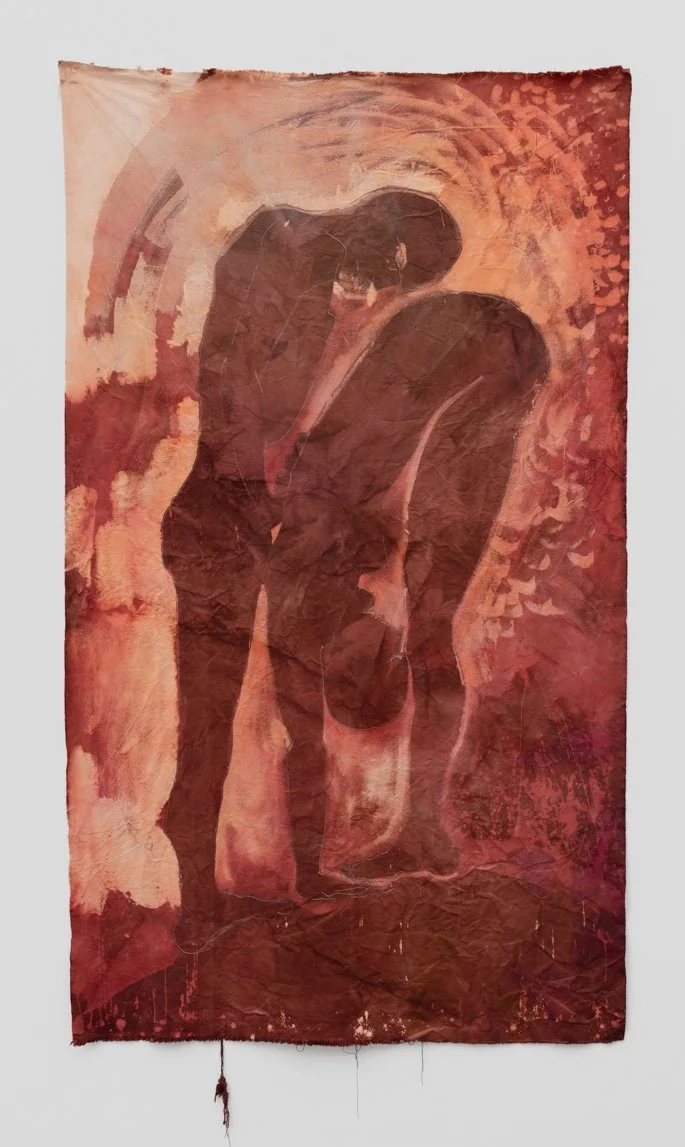
Baird, Harmony?, 2019, Hand Dyed Canvas, Bleach and Melted Glue, 98.43 x 57.09 in, $9,000
Gone with the Wind is a large-scale work employs both drawing and embroidery in tandem, working with the tension between line and thread, negative and positive space, movement and stillness. At the center of the composition the artist placed a fragmented face, rendering it in careful detail. Made to appear as though it were part of a larger sculpture, the image was inspired by a broken off piece of a Greek sculpture the artist encountered at the Metropolitan Museum of Art. Layered over the drawing are waves of cotton thread embroidery, stretched and flowing to suggest the movement of time—or, as the title proposes, the sweeping power of the wind.
We welcome you to explore the works by Dana Nechmad.