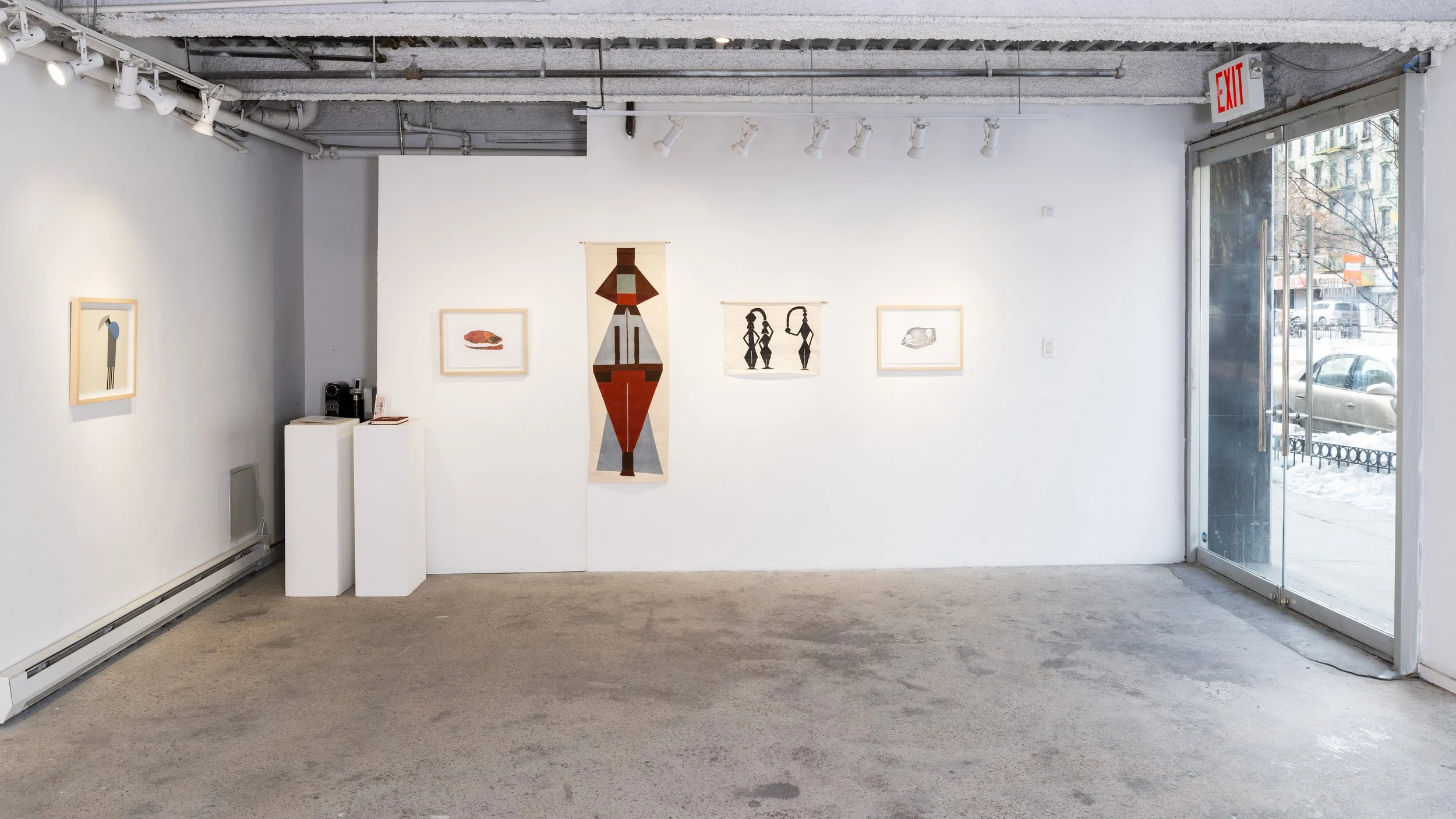
BELONGING TO ELSEWHERE
Noa Ironic, Olga Kundina, Dana Nechmad, Ruti De Vries, Natalia Zourabova
January 28th - March 7th
Opening Reception: January 28th, 6 - 8 pm
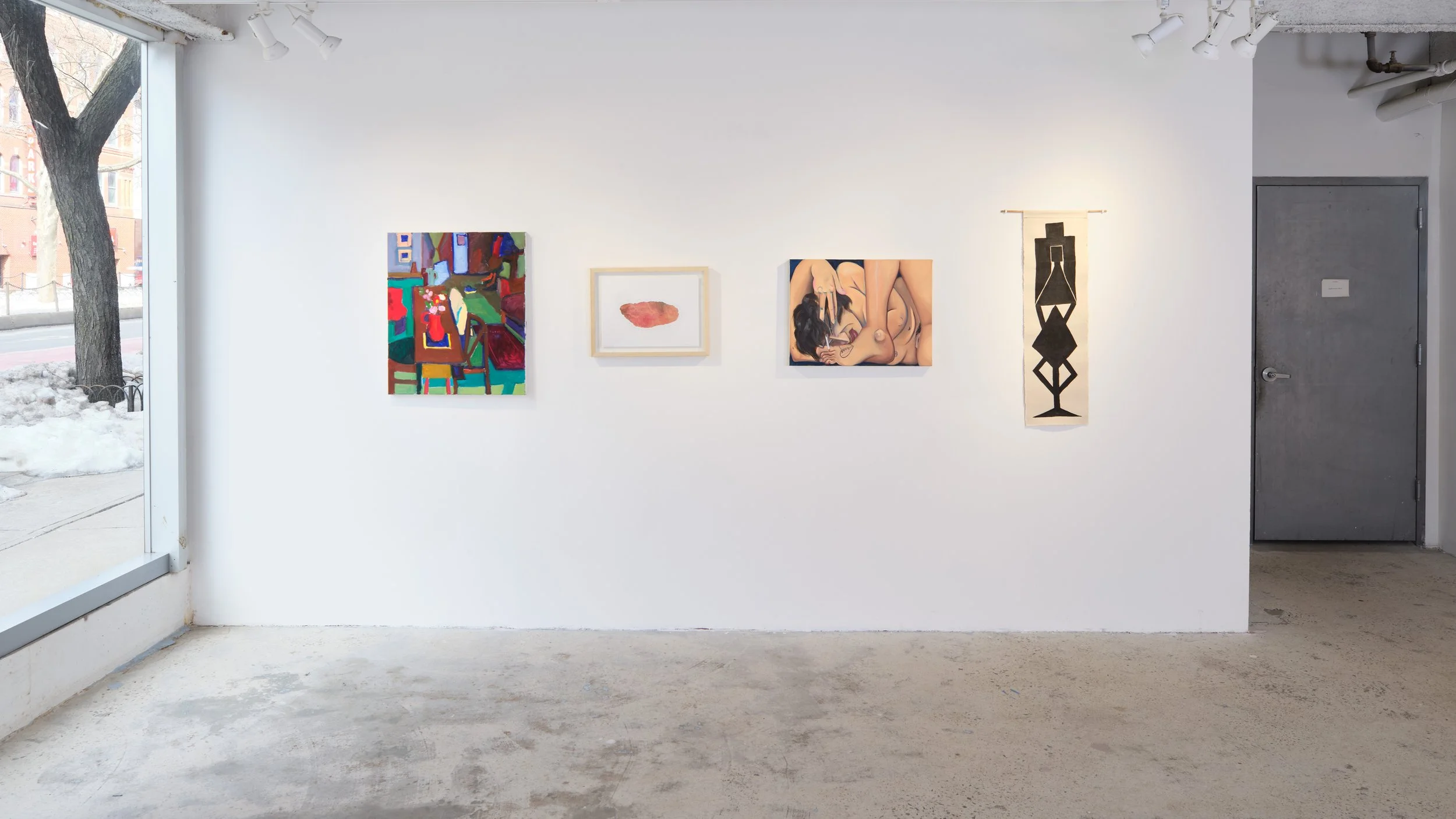
KALINER presents Belonging to Elsewhere, a group exhibition featuring works by five artists Ruti De Vries , Noa Ironic, Olga Kundina, Dana Nechmad, and Natalia Zourabova.
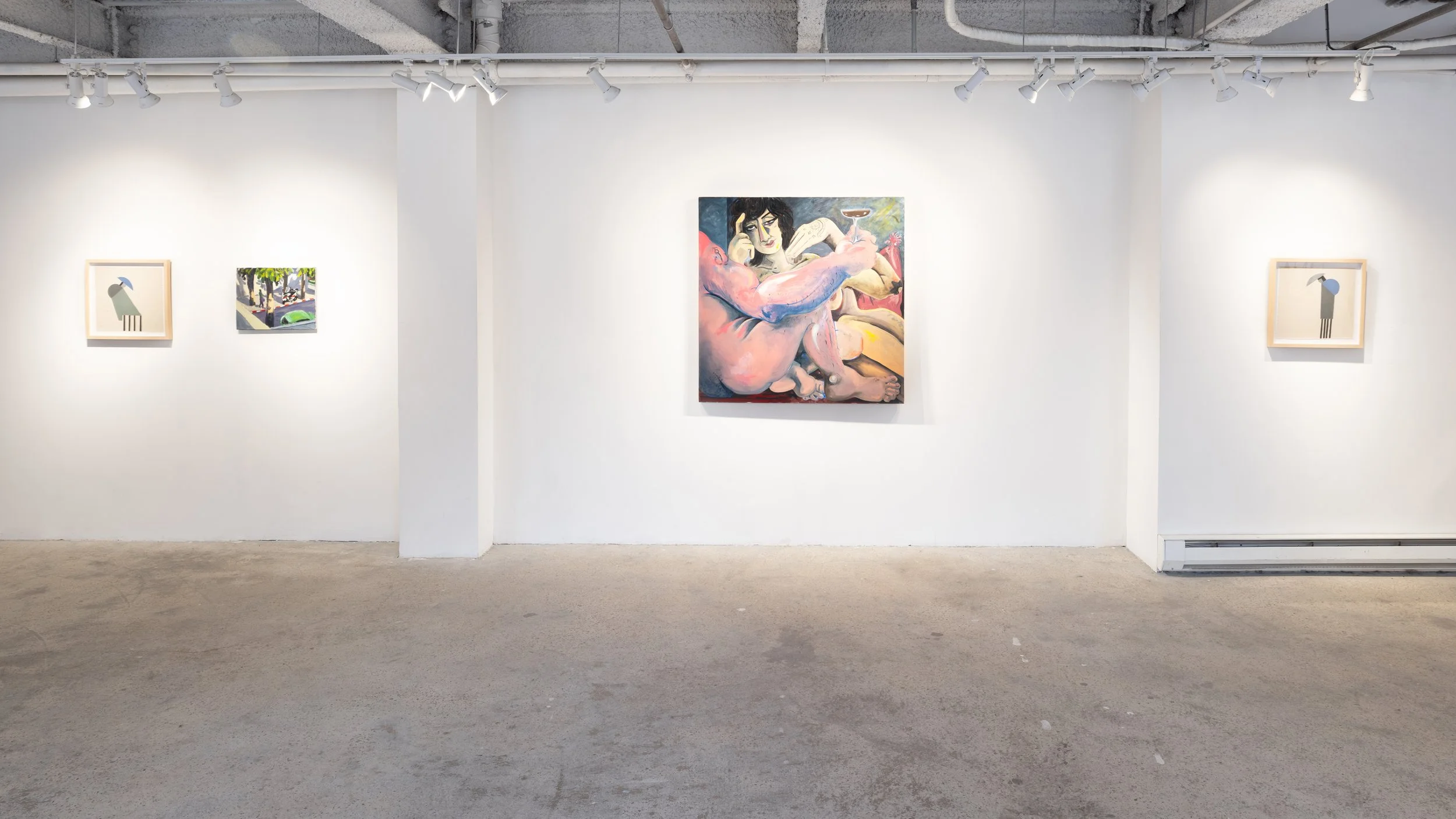
The exhibition explores the multifaceted experience of homesickness—not solely as nostalgia for a physical location, but as a layered emotional condition shaped by memory, perception, and identity. Through varied mediums and visual languages, the five artists investigate how belonging is constructed, remembered, and reimagined. Their works traverse fractured landscapes, reconfigured domestic environments, ancestral mythologies, symbolic forms, and the tactile traces of lived experience.
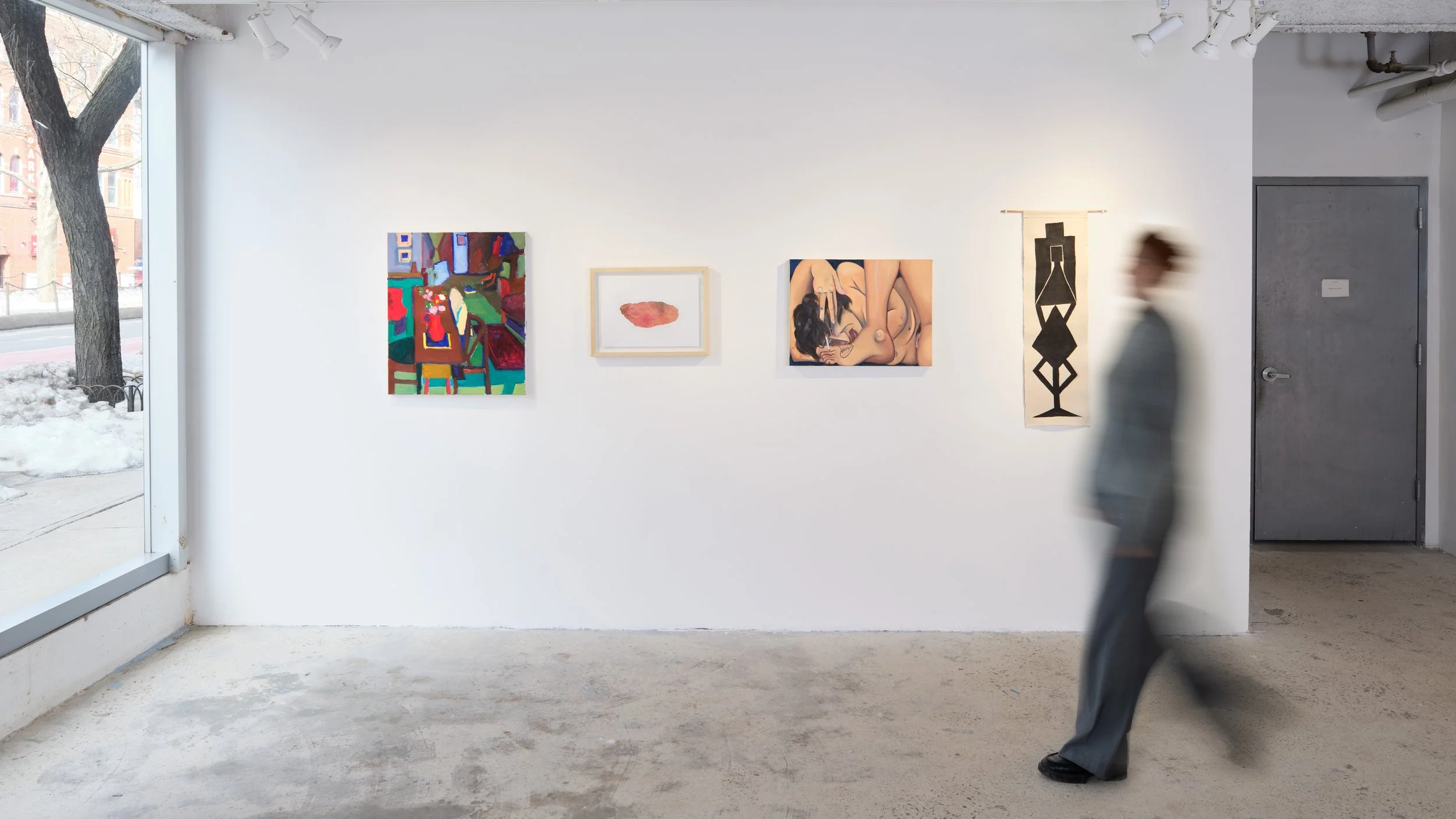
Noa Ironic’s painting reflects her deep engagement with personal narrative, identity, and emotional states. Her work often navigates the terrains of memory and human relationships, drawing on imagery that blends figuration with expressive psychological terrain. While exploring the boundaries of gender and roles it plays in your physical and mental space, Ironic’s figurative, highly saturated compositions underscore their performative contradictions and quiet absurdities. Humor is central to her practice, serving not as ornamentation but as a tool to disarm the elitist conventions of the art world. In her painting Staring At My Foot Like It’s Going To Solve Something the artist invites the viewers into intimate and relatable moment, that ultimately reveal universal truths through the familiarity and banality of the depicted scene. Often painting her own avatar, Ironic is extending an ongoing exploration of self-reflection and contemporary image-making, and the roles it inhabits within both psychological and physical space.
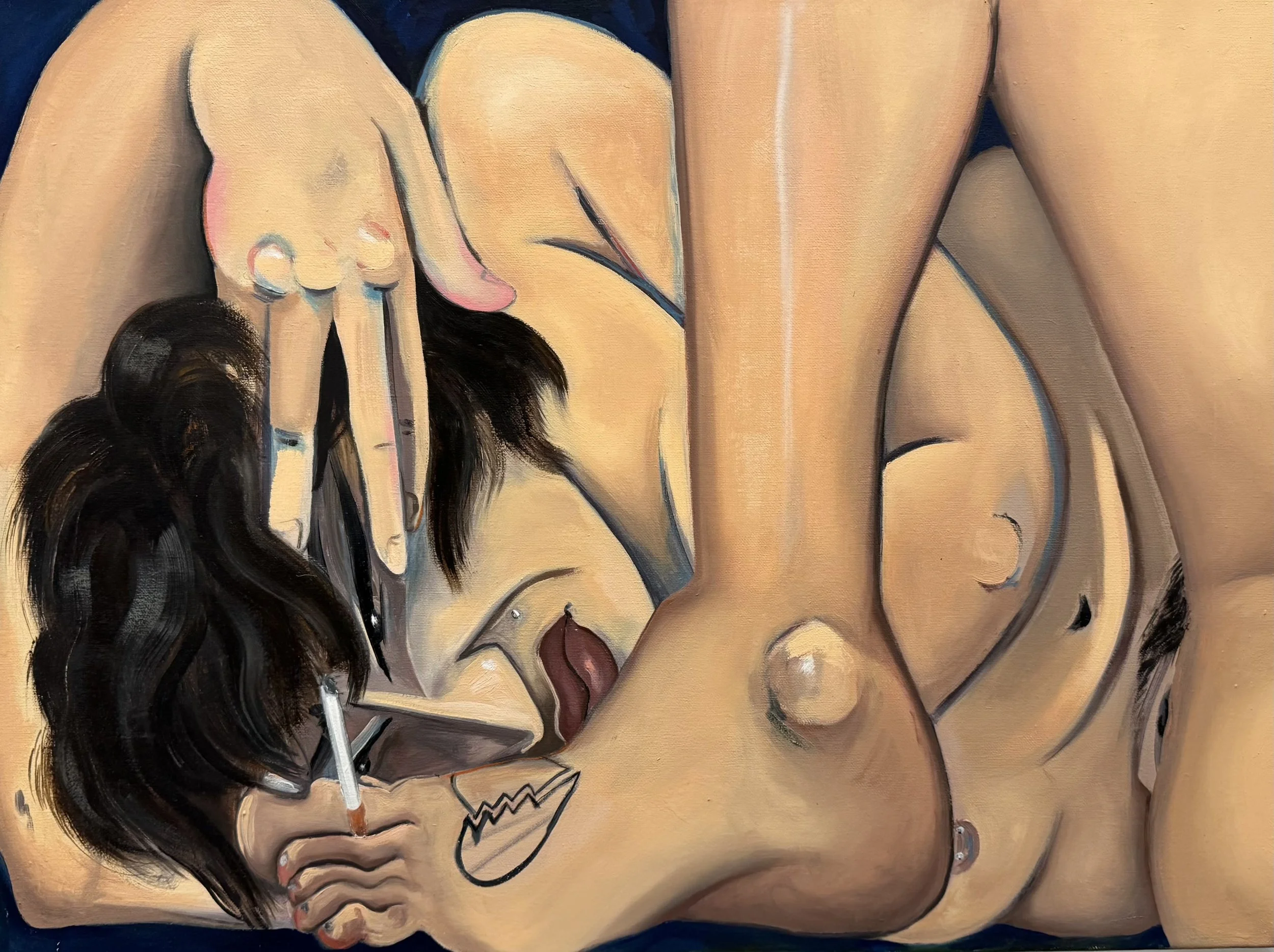
Staring at My Foot Like it’s Going to Solve Something, Noa Ironic, 2025, Oil on Canvas, 11.8 x 23.6 in
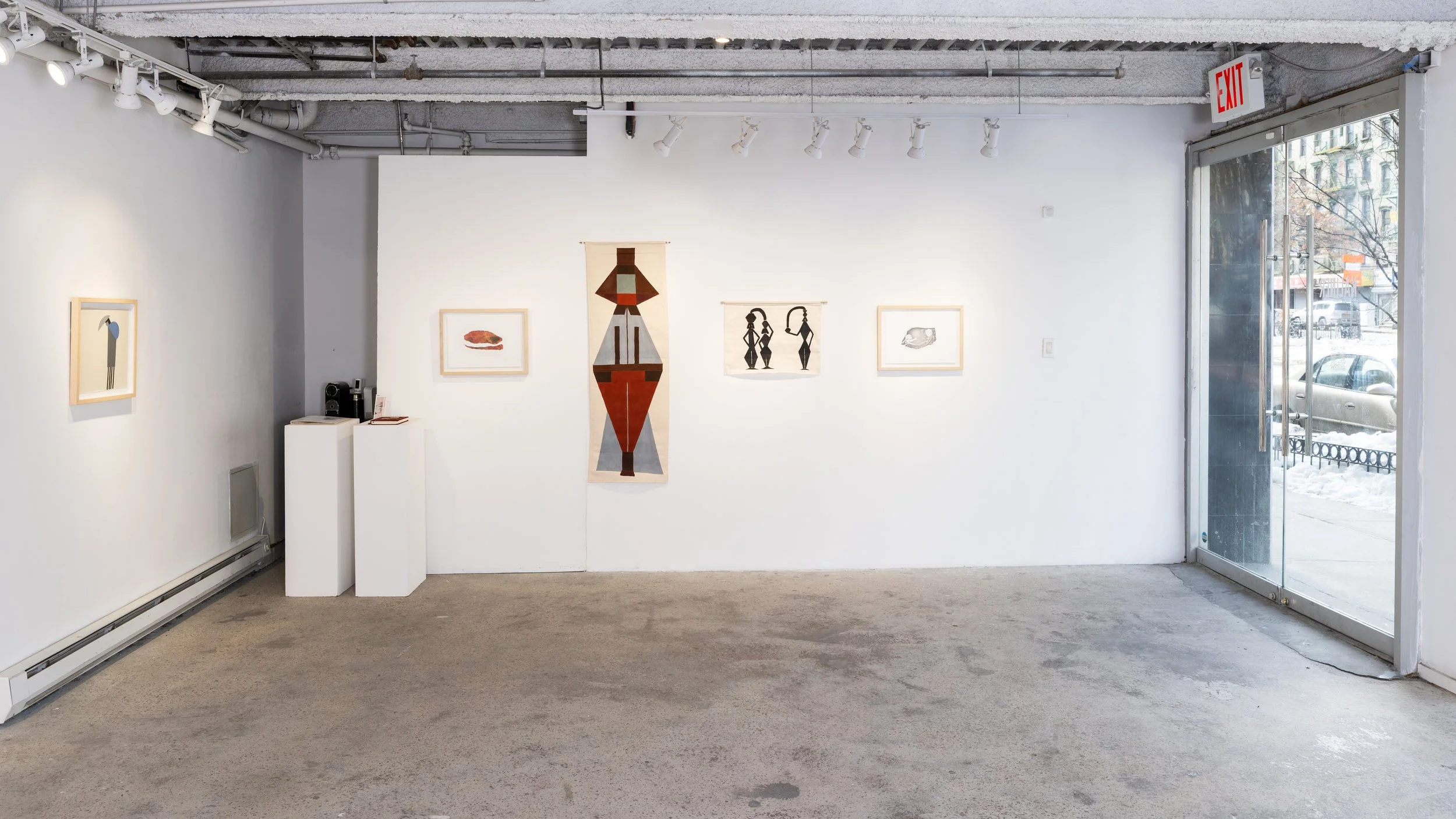
Ruti De Vries work generates enigmatic figures and symbolic forms that merge myth, folklore, and everyday materials. The artist’s figures are presented as sculptural paintings, twisting the line between dimensions. They are faceless and yet full of intention, acting as archetypal characters, carrying both histories and longings inside them. De Vries conceives her practice as an ever-expanding spiral, continuously gathering new motifs and materials to construct an enigmatic mythology that recurs throughout her work. Drawing equally from ancient, indigenous, and outsider art, as well as from fashion and theater, she builds worlds that feel both archetypal and invented. Working quickly and intuitively, she allows process to guide form, moving between obsessive labor and immediate expressiveness. Within these meticulously constructed fragments, distinctions between human and animal, masculine and feminine, organic and artificial begin to dissolve. De Vries explores questions of gender, labor, and creative hierarchies, as well as the cultural architectures of kitsch and melodrama. Ornamentation, pattern, and symmetry—hallmarks of craft traditions—take center stage, generating a persistent tension between two-dimensionality and volume, the graphic and the sculptural, sign and presence.
Natalia Zourabova reimagines familiar domestic interiors through a process of memory and compositional synthesis. In the exhibited artwork Table, Zourabova combines strong color pallet, which is meaningful in her recent body of work, and spatial invention to transform an ordinary room into a emotionally charged space that oscillates between presence and absence. A person is not occupying the interior, yet we can feel one’s strong presence via everyday objects. By merging observed elements with imagined configurations, the painting conveys a sense of place rooted not in geographic reality but in emotional resonance—where objects like the red vase become anchors for memory, longing, and the internal negotiation of home. In this way, her work reflects the exhibition’s exploration of belonging as an affective condition shaped by recollection and perception, rendering the familiar uncanny and the everyday deeply felt.
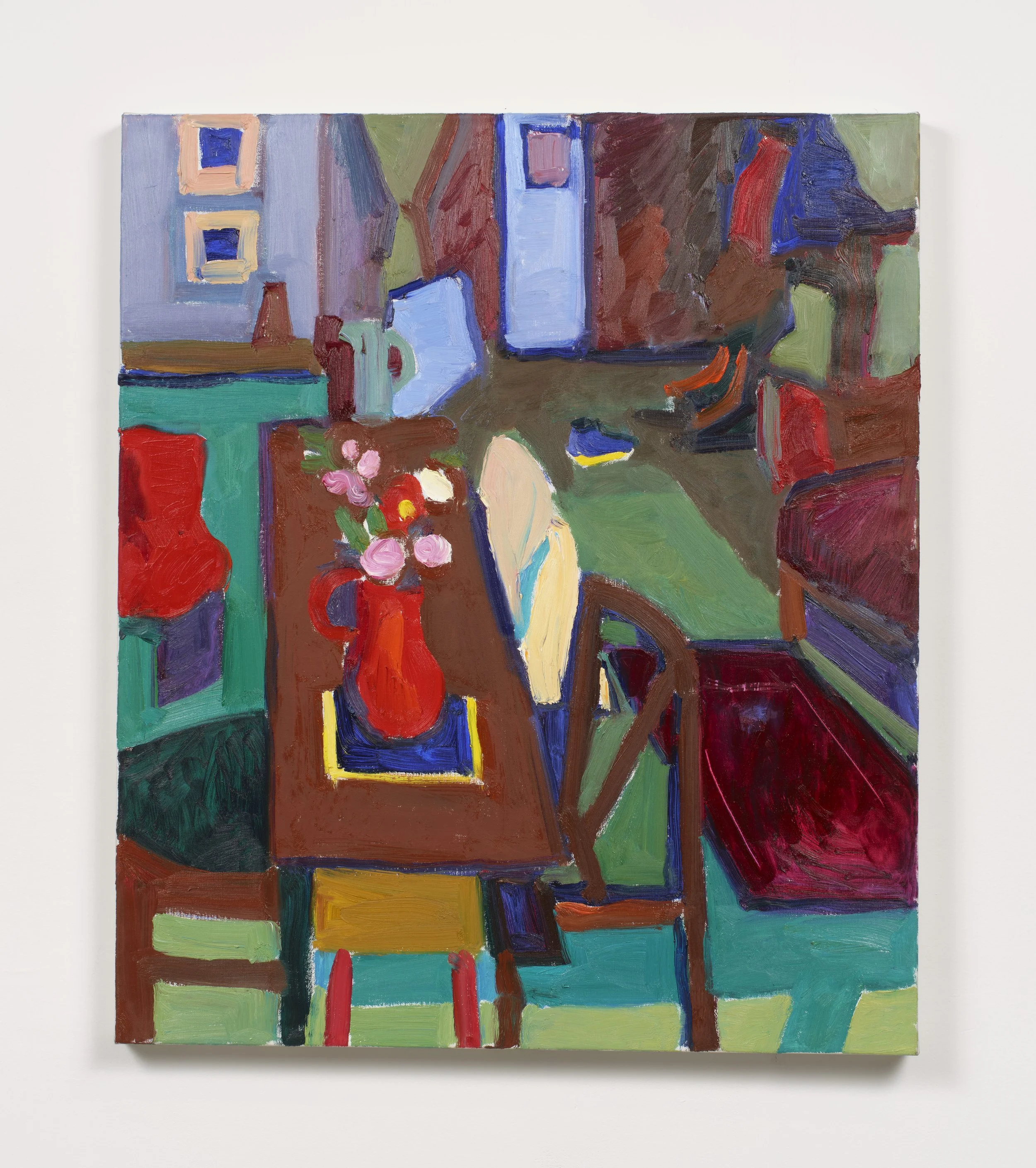
Table, Natalia Zourabova, 2025, Oil on Canvas, 27.5 x 23.6 in
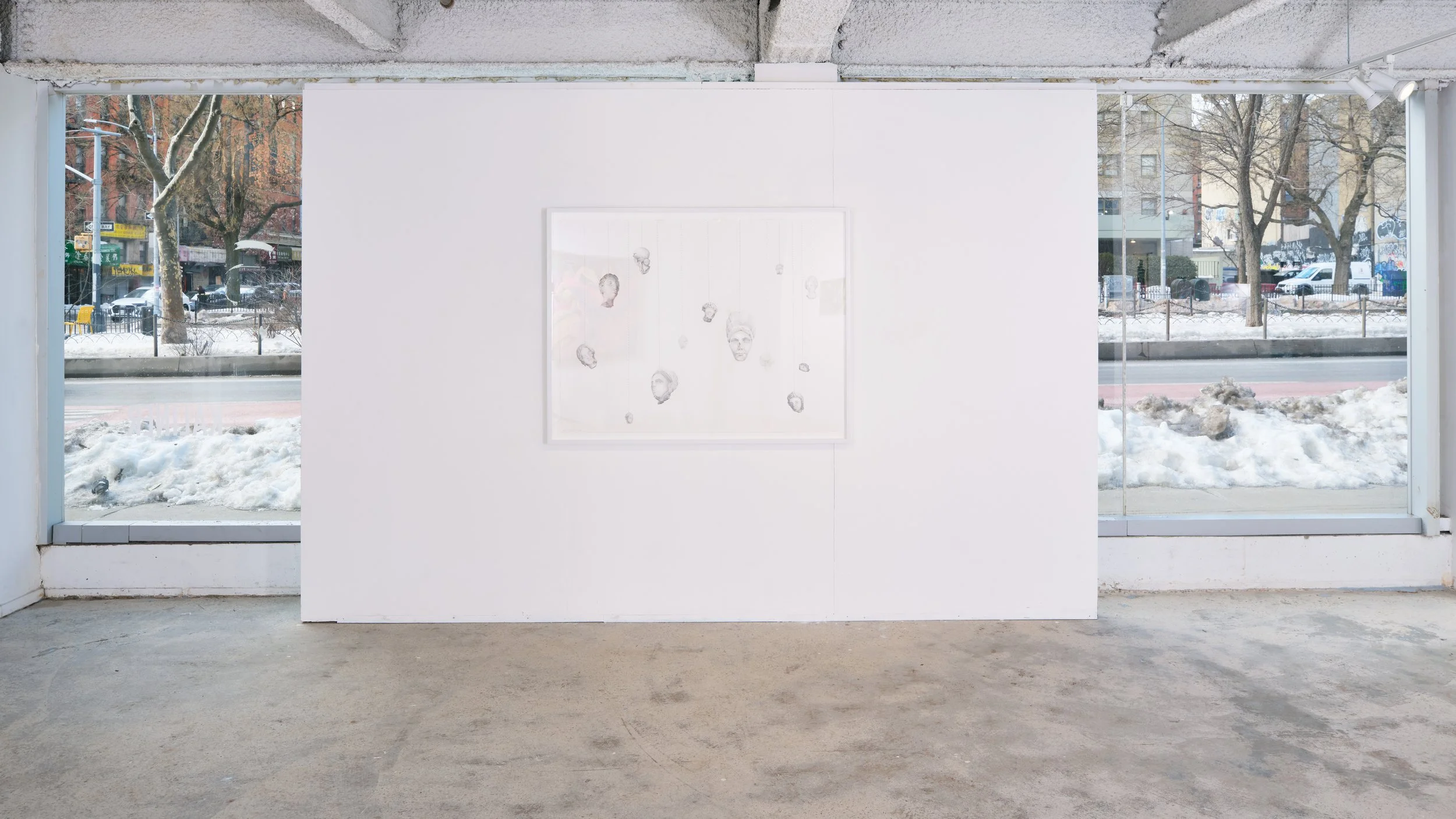
Dana Nechmad’s work in Belonging to Elsewhere extends her practice of constructing a personal visual mythology. It is by combining personal narratives with symbolism taken from Western cultural caches, that Nechmad manages to employ a closeness between herself and impossibly large notions. Nechmad moves freely from the archetypal to the concrete and vice versa; questioning the ideal, in both form and content. Her intricate combinations of embroidery and drawing evoke intimate, non- linear odysseys that unfold in a psychological realm, where figures traverse states of longing, struggle, and transformation. In doing so, her work resonates with the exhibition’s exploration of emotional geography—revealing belonging not as a fixed origin but as an evolving narrative shaped by memory, identity, and the body itself.
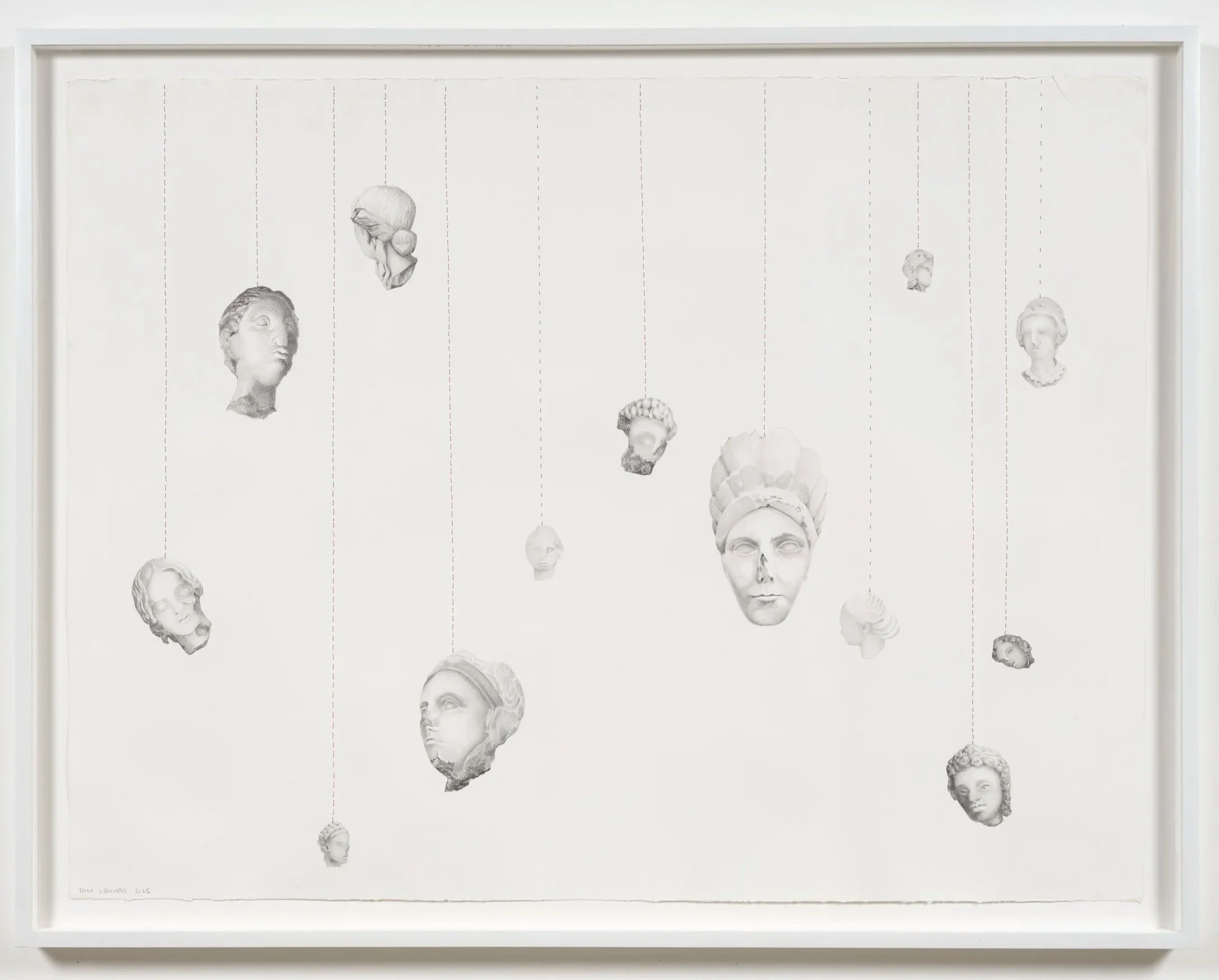
Soon They Will Come, Dana Nechmad, 2025, Graphite and Embroidery on Paper, 37.5 x 49 in
Olga Kundina’s work engages the viewer with dynamic depictions of external environments, informed by her long engagement with urban landscapes while painting plain-air. Kundina’s paintings absorb and reflect the visual rhythms of cities, rendering scenes that simultaneously register specificity and emotional resonance through expressive color and form. Her compositions translate experiences of place into perceptual landscapes that both anchor the viewer in recognizable environments and unsettle that familiarity through painterly shifts in perspective and tone. Kundina’s practice extends the exhibition’s exploration of emotional geography by positioning the exterior world as a terrain of memory and identity—where the familiar and unfamiliar coalesce, and where belonging is mediated through lived experience.
Belonging to Elsewhere invites viewers to reconsider the emotional geographies of home and distance: how we carry places within us, how memory reshapes the familiar, and how the longing for elsewhere becomes a catalyst for creative inquiry.