The Past Is Not Where You Think You Left It
Cameron Gray
January 9 - January 23
Opening Reception: January 9th, 6 - 8 pm
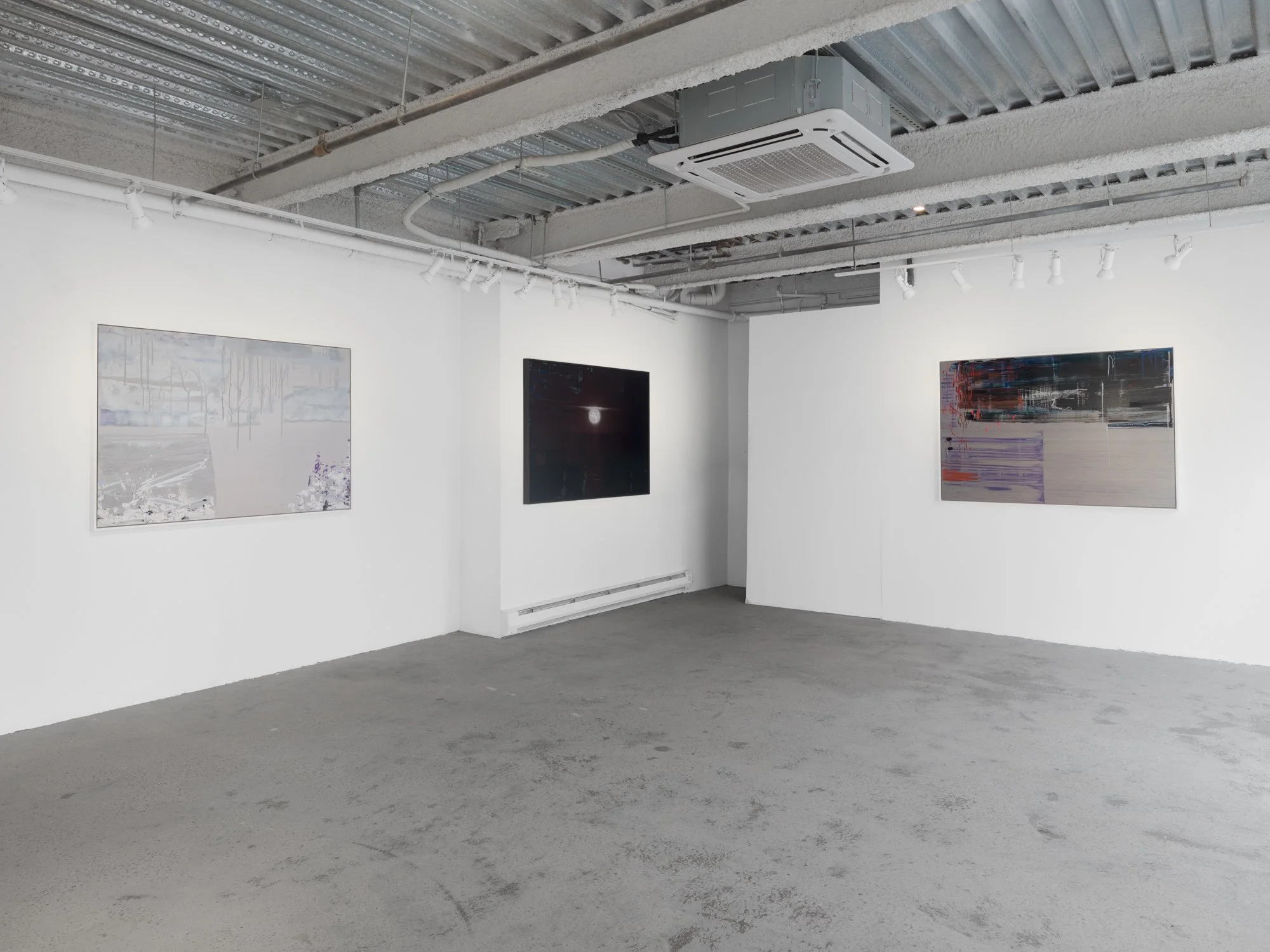
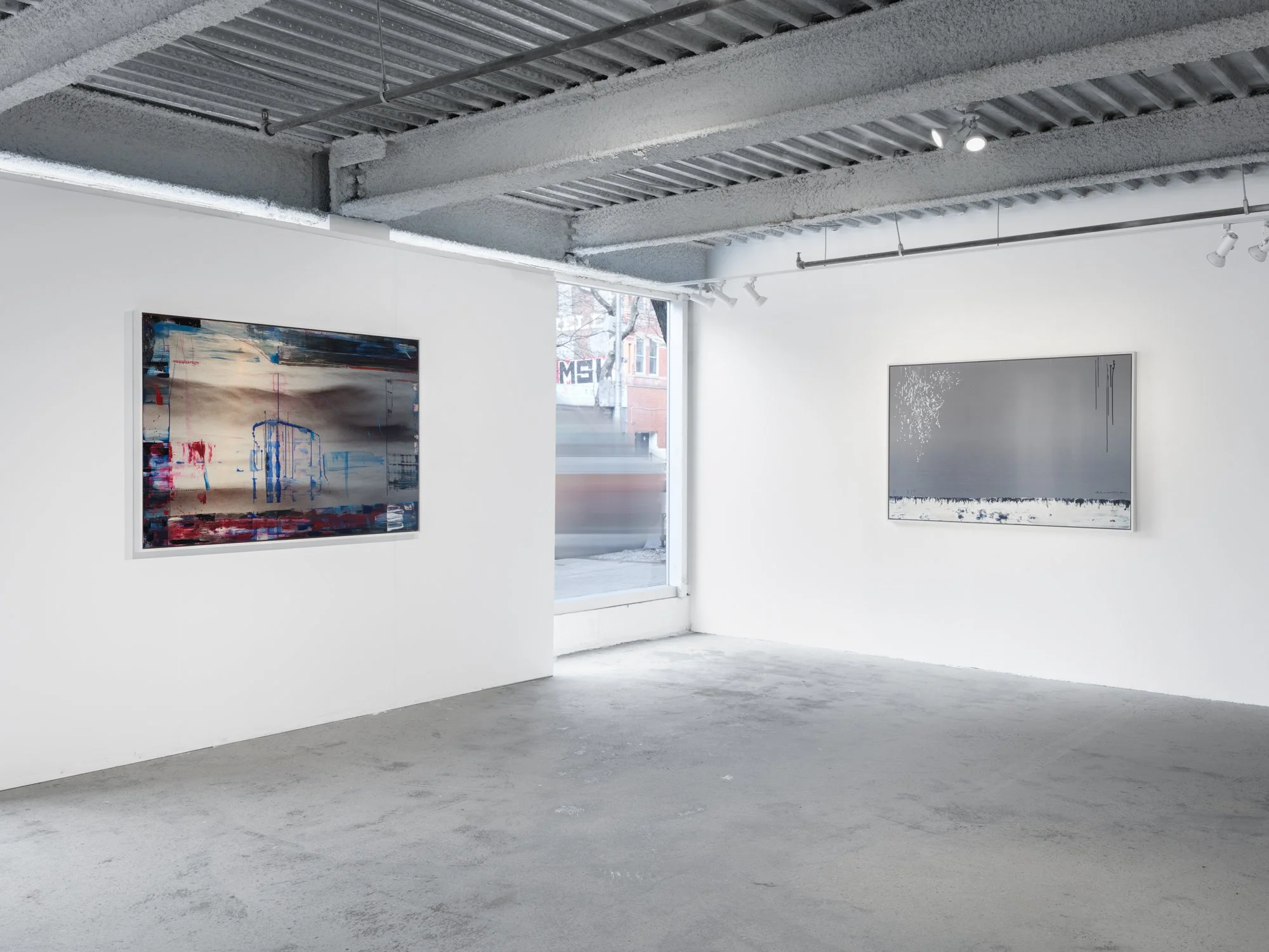
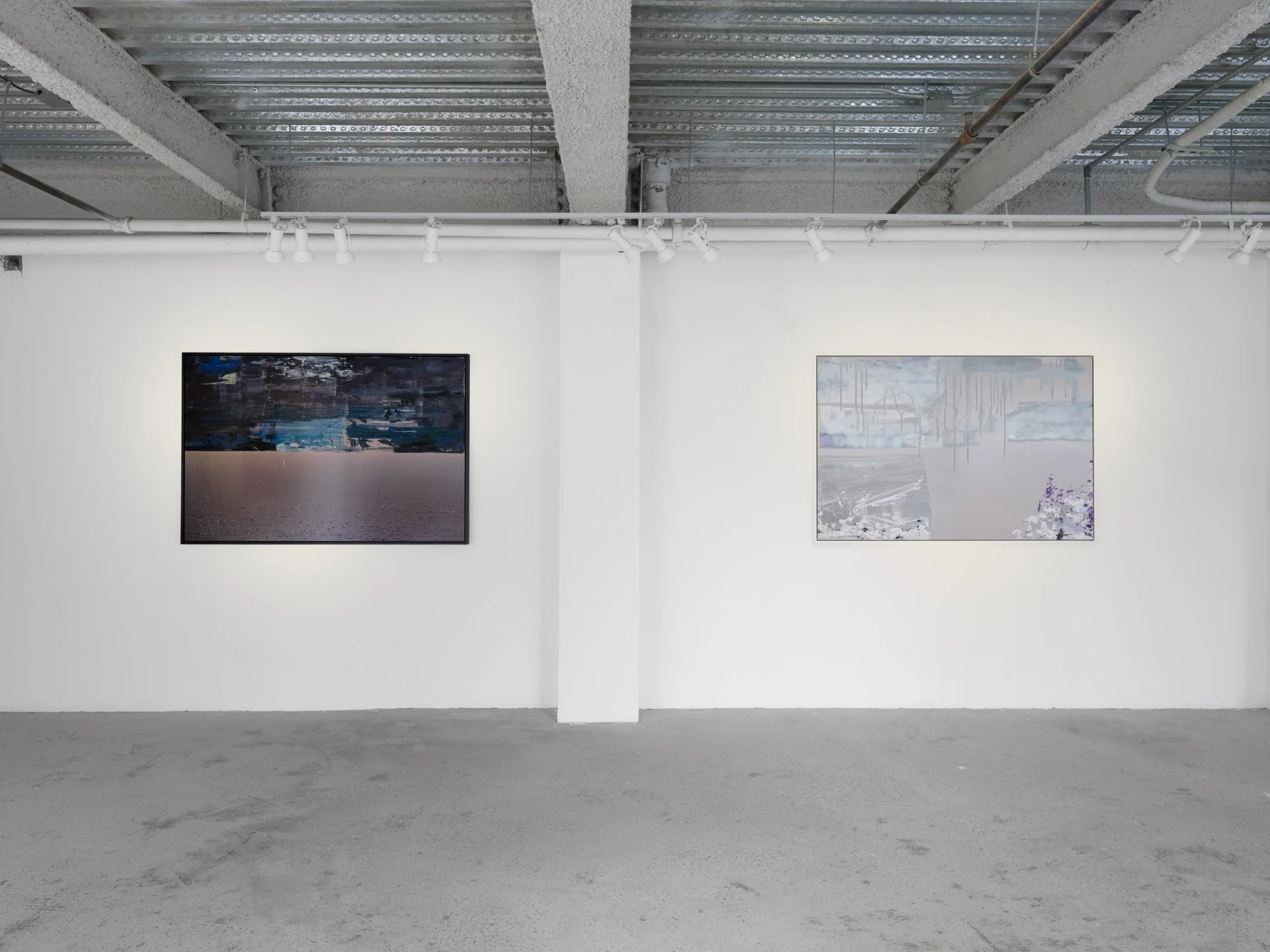
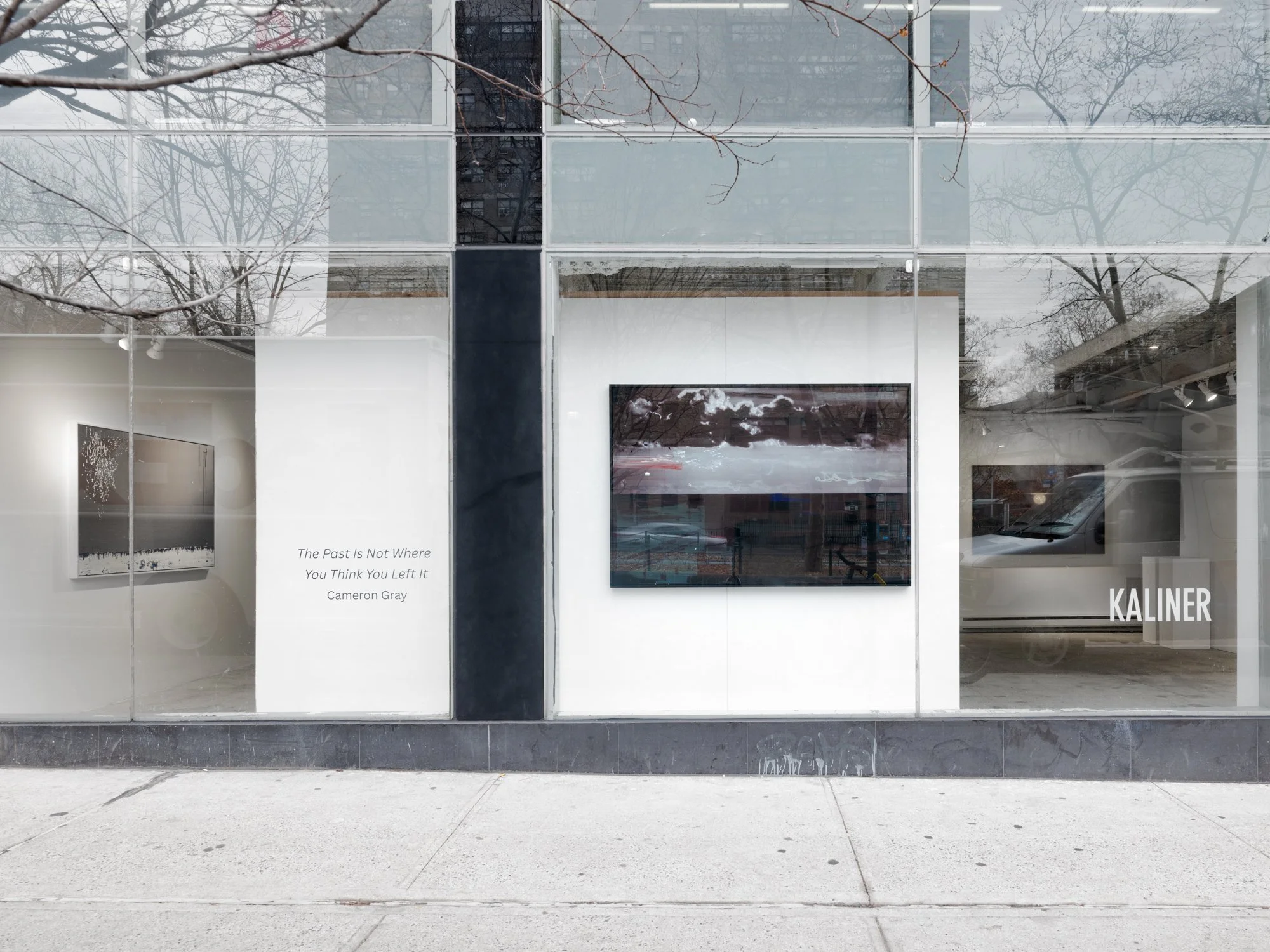
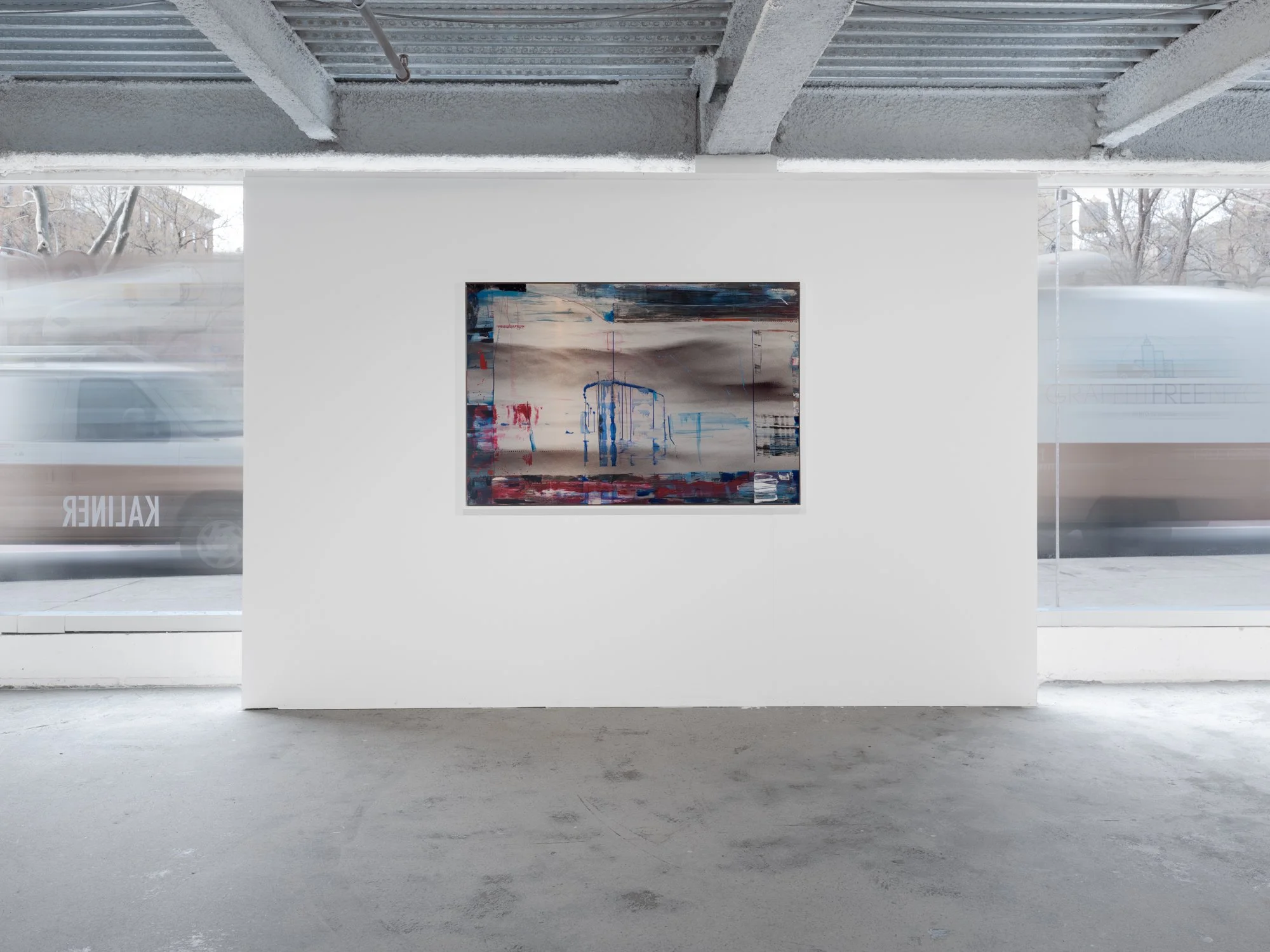
KALINER is delighted to present Cameron Gray’s inaugural solo exhibition ‘The Past Is Not Where You Think You Left It’. The exhibition features 7 large scale artworks, the first of a three-part ongoing series titled Transcapes. The presented works are both literal and metaphorical landscapes, unfolding as meditative studies on the shifting planes of perception and memory.
Cameron Gray’s practice is grounded in his postdoctoral research in neuroscience, where questions of vision, cognition, and perception first took root. The Transcapes series began with the artist’s enduring fascination with the mechanisms of neuronal visual processing, and how these mechanisms shape what we consciously perceive. This fascination forms a continuous thread throughout his work. In his practice Gray uses mulitple starting points including photography, physical newspaper and magazine cutouts, and texts from book pages. In this series images are not simply seen but transcaped—processed, filtered, and reconstituted through neurological and perceptual systems. Vision is understood not as a direct recording of reality, but as an active, instinctual act of editing performed by the brain. As photographic source material moves through layers of intervention— painterly gesture, print, distortion, and assembly—it crosses disciplinary and perceptual boundaries. The image emerges as a transcaped object: no longer purely photographic or painterly, but transformed by the mechanisms of cognition itself and residing in a liminal space bounded by photography and painting.
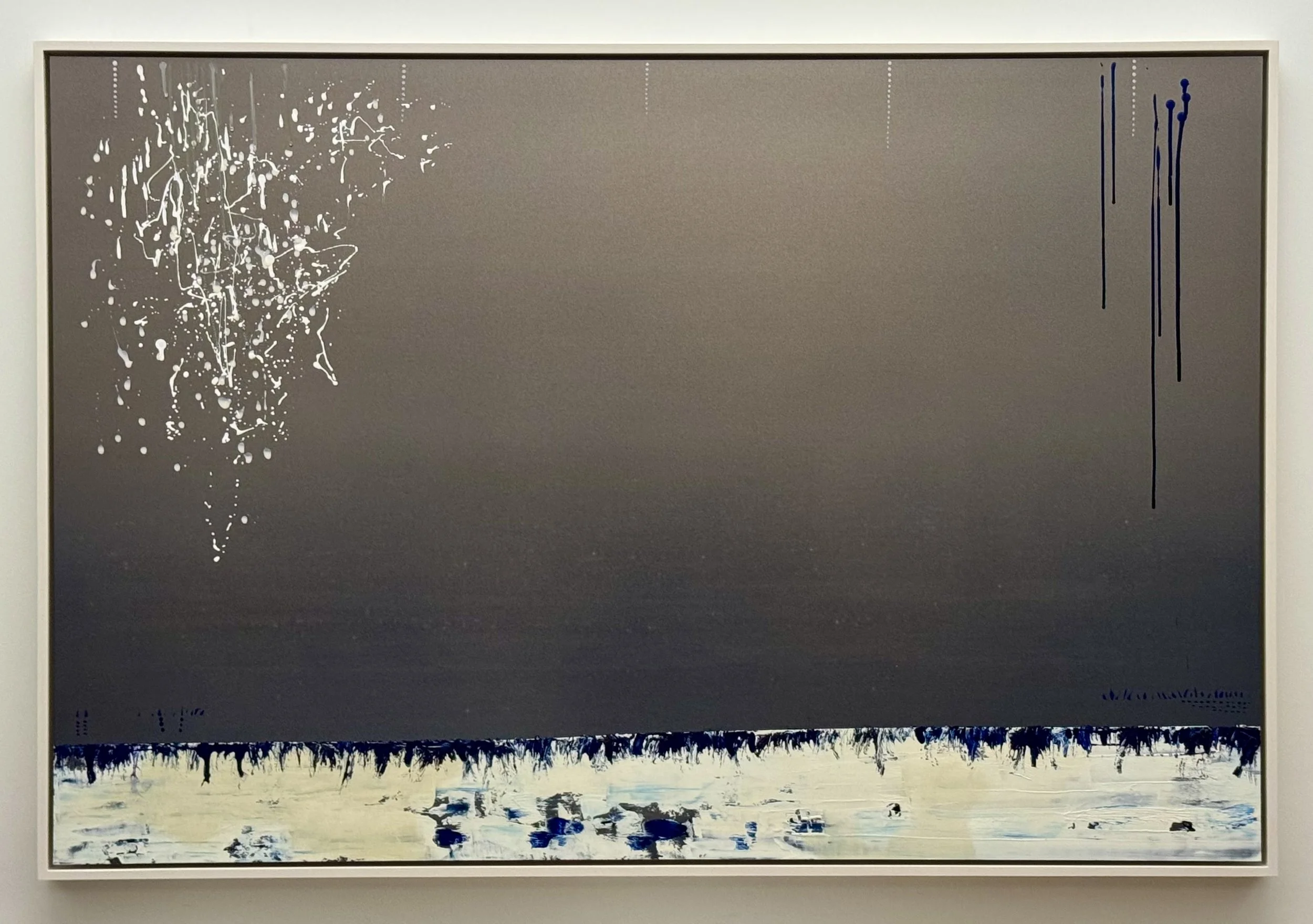
Transcape 4, Cameron Gray, Mixed Media on a Dye Sublimation Print on Aluminum, 40 x 60 in
In the first part of the Transcapes series presented in the exhibition, Gray uses his own photography as a baseline for his work. The photographs were meticulously chosen from dozens of rolls of films taken on 35-millimeter and medium format cameras during his daily travels along the Northern California coast, capturing the artist’s fascination with the natural world, particularly the Pacific Ocean's ever-changing boundary between the sea and the sky. Photographs are captured under carefully controlled lighting and weather conditions, then taken to the next stage of Gray’s artistic process to complete what the camera missed. Photographs serve as an underpainting, marked with mixed media paint. Building up the coats of enamel paint, gouache, acrylic, ink, and even nail polish, Gray assembles a record of a deeper visual processing, untethered to a specific medium.
The exhibition title The Past Is Not Where You Think You Left It suggests a condition in which memory resists containment. Rather than remaining safely behind us, the past stays active—reappearing through perception, instinct, and the quiet mechanisms of cognition. What seems settled or archived continues to surface, reshaped by time, biology, and experience. The title points to the instability of recall: memory is not a fixed record but an ongoing reconstruction, similar to Gray’s artistic process. The past disperses across images and neural pathways, embedded within the present and continually shaping how we see. Within the exhibition, the past does not return intact—it arrives altered, filtered through Gray’s intuitive lens and material process.
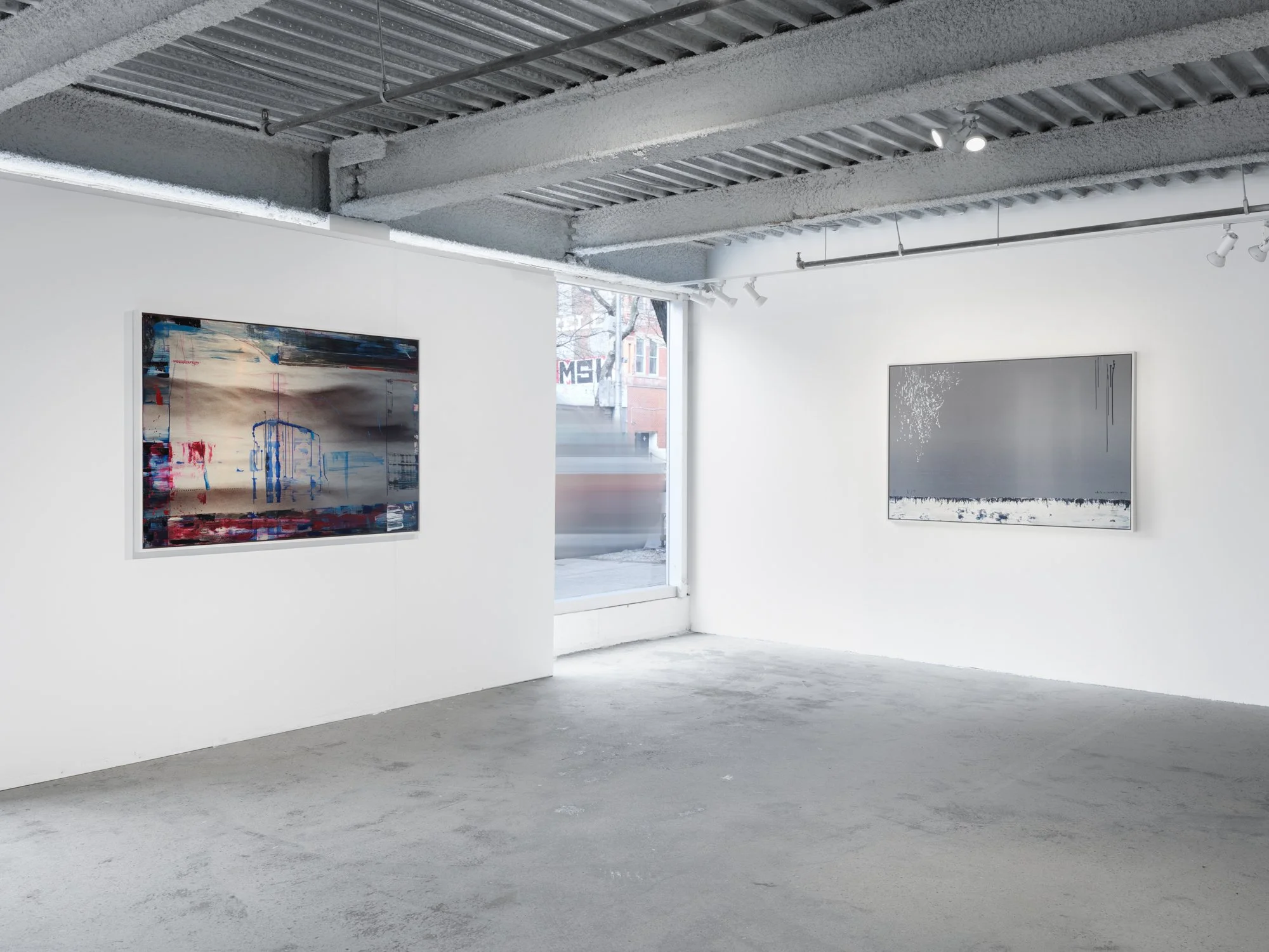
The artist’s process not only documents the locations he repeatedly visited for over a decade, but transforms the visuals into a deeper perception. The artworks presented in the exhibition The Past Is Not Where You Think You Left It are inviting the viewer to slow down and explore ever oscillating line between the actual moment visible to the eye and the feeling created by the artist’s physical process of paint building. In this unique process the artist is retrieving context lost in time. Each artwork summons us to explore the space between seeing as a neuronal process and as a lived experience.
While the mind has been endlessly theorized and examined, Gray turns toward the more elusive terrain at its edges: the liminal space where sensory input becomes visual experience that is continuously and invisibly edited by our brain. Gray’s work unfolds within these borderlands, suspended between biology and awareness.
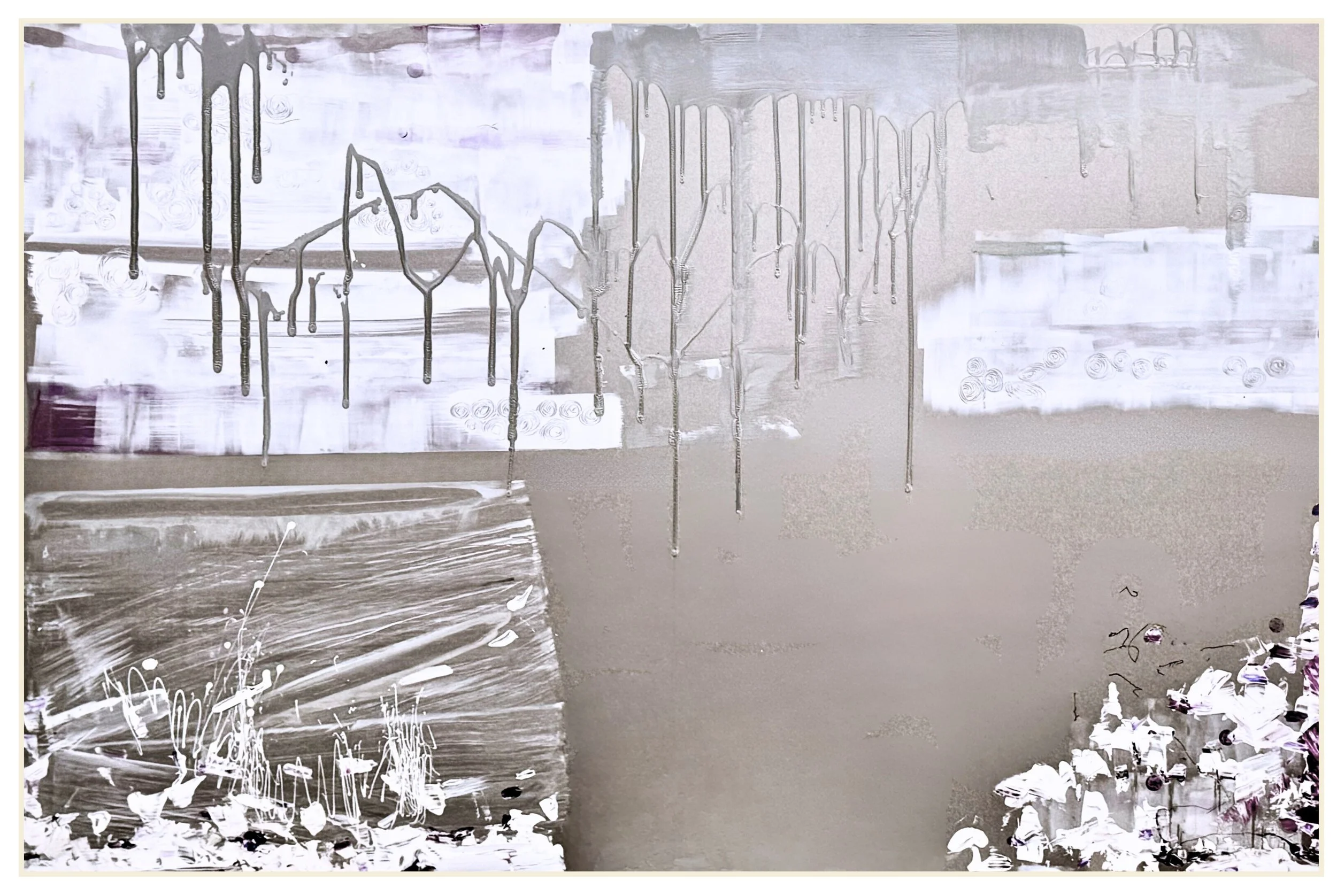
Transcape 10, Cameron Gray, 2025, Mixed Media on a Dye Sublimation Print on Aluminum, 40 x 60
About THE ARTIST:
At the intersection of art and neuroscience, Cameron Gray’s practice is shaped by a lifelong inquiry into perception, cognition, and the unseen systems that govern human experience. His large-scale, mixed-media works emerge as immersive fusions of scientific rigor and poetic intuition, translating complex biological processes into visual and material form.
Gray’s path was profoundly shaped by the passing of his grandmother due to complications from Alzheimer’s disease—an experience that catalyzed his pursuit of higher education across disciplines including physics, biophysics, cognitive neuroscience, and law. While his academic and professional career unfolded within highly structured, data-driven environments, the studio evolved as a parallel and essential space: a counterpoint to numbers, analysis, and business, where intuition and nonverbal reasoning could take precedence.
Following his formal studies, Gray committed himself deeply to his artistic practice, developing a substantial body of work that continues to evolve through extensive experimentation. His process navigates the liminal territories between painted photography, print film, assemblage, and other material interventions, probing the borderlands where image, memory, and perception blur. Much like neurons communicating across synapses, Gray’s work unfolds through networked dialogues across these in-between spaces, where individual details dissolve until conviction emerges. It is at this moment of coherence that each series comes into being.
The studio functions as a vital cognitive and emotional sanctuary for Gray. Vinyl records often play throughout his working hours, their melodies and lyrics weaving obliquely into the rhythm of his process—flickering at the edges of awareness, yet quietly shaping the emotional register of the work. This dynamic between sustained focus and cognitive drift parallels the perceptual processes explored throughout his practice.
Cameron Gray holds a Ph.D. in biophysics from the University of Virginia, a J.D. from The George Washington University School of Law, and a B.A. in physics from Princeton University. He has also built a career as a biotech entrepreneur, investment banker, and investor—experiences that inform his artistic discipline, precision, and ability to reduce noise in pursuit of clarity. Gray has exhibited in multiple exhibitions across the United States, and his works are held in notable private collections.
He resides in Montecito, California with his wife Julie and son Connor. When not in his studio or office, he can often be found surfing or hiking.