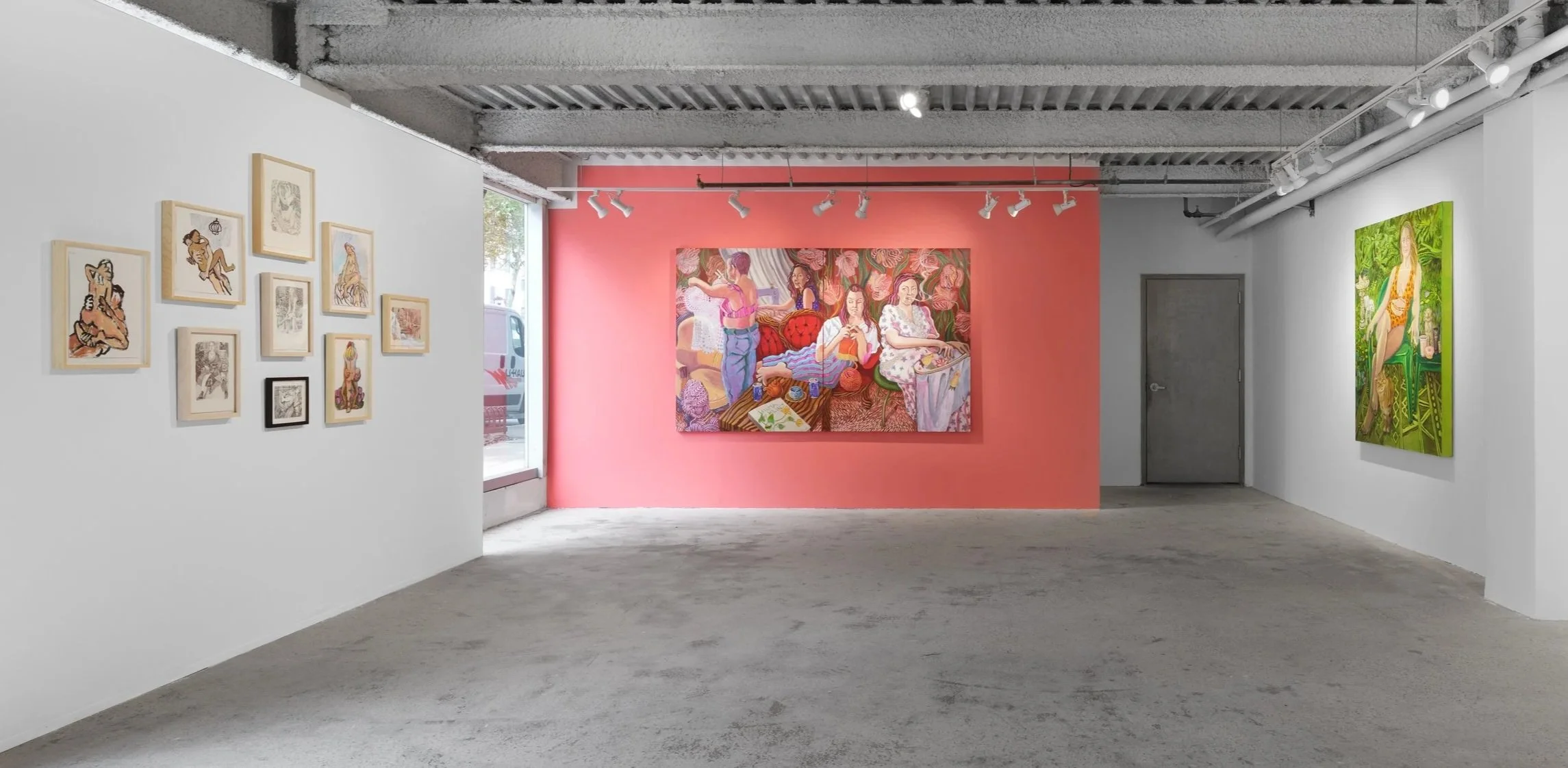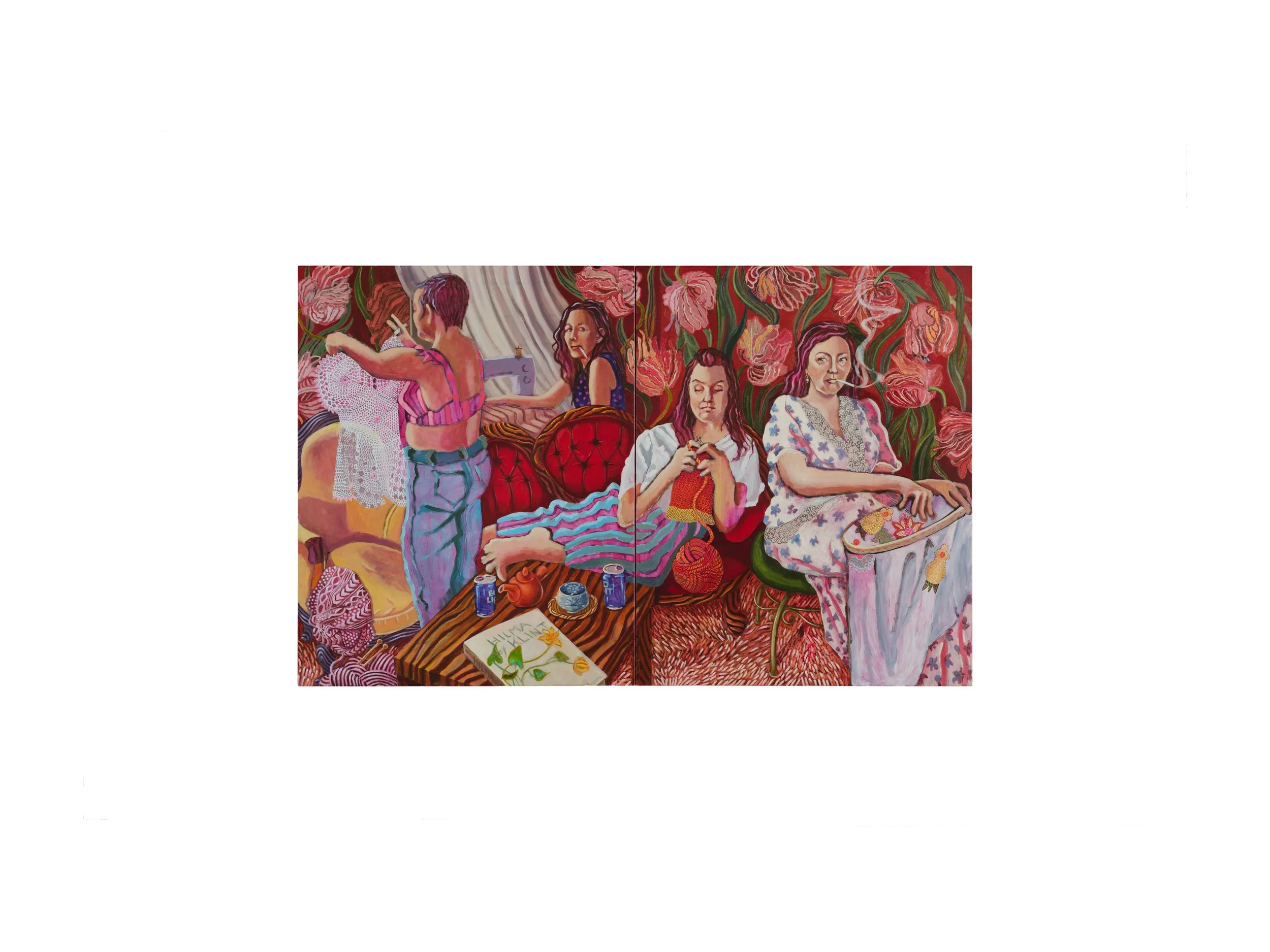
Barbara Ishikura, Good Work, acrylic & oil on canvas, 60 x 96 x 1.5 in
ACQUIRED TASTE
BARBARA ISHIKURA
Opening Reception: September 10, 6 - 8 pm
September 10 - October 3
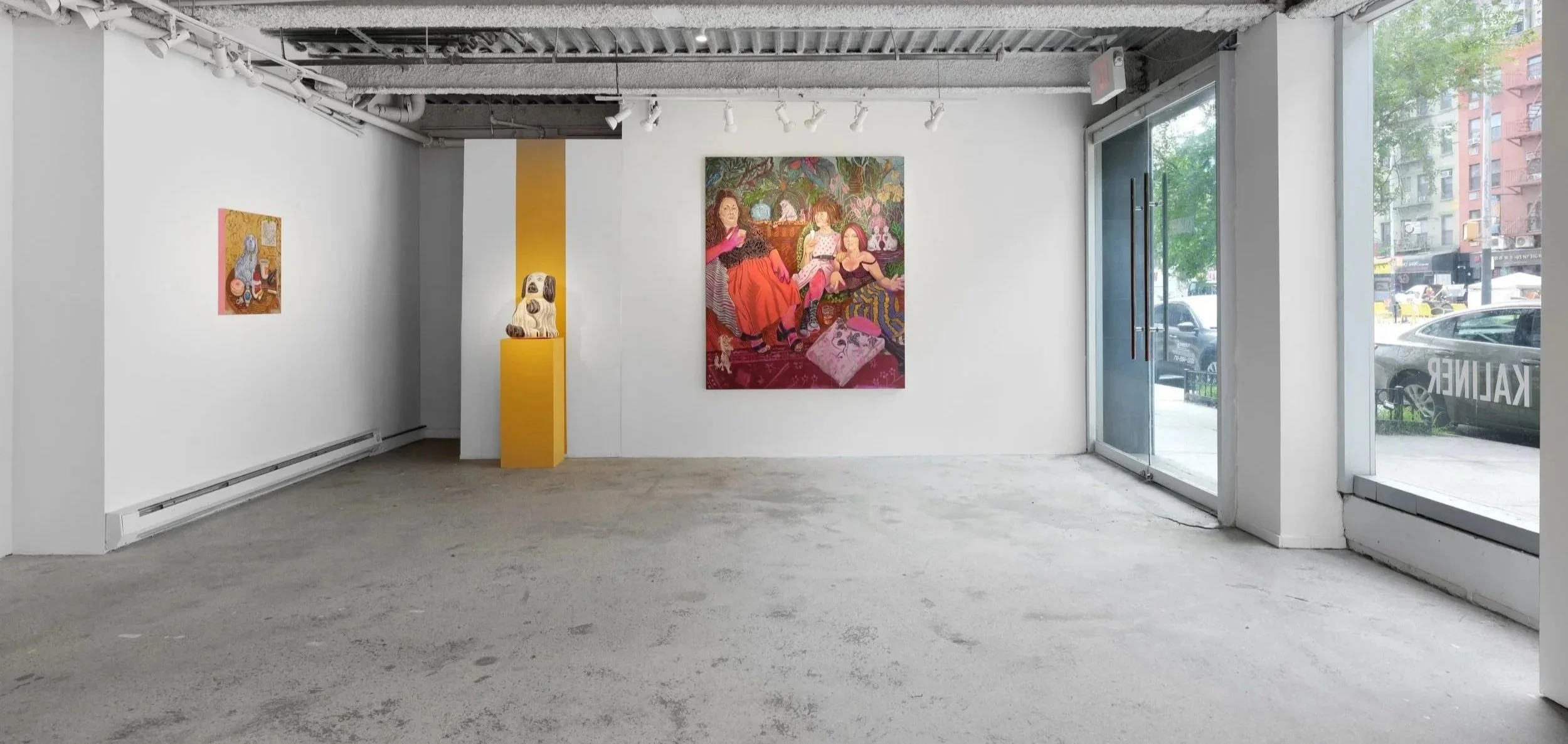
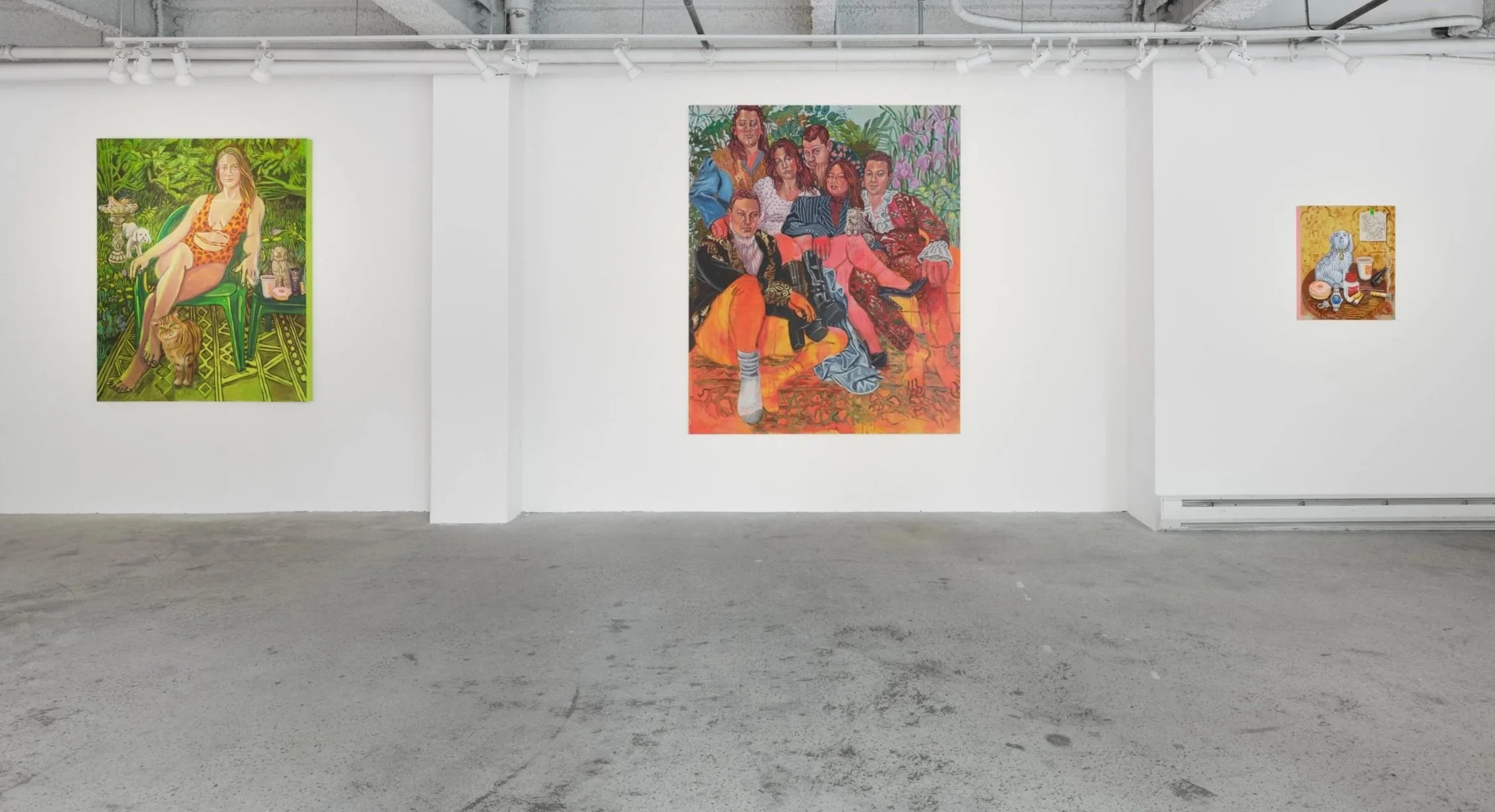
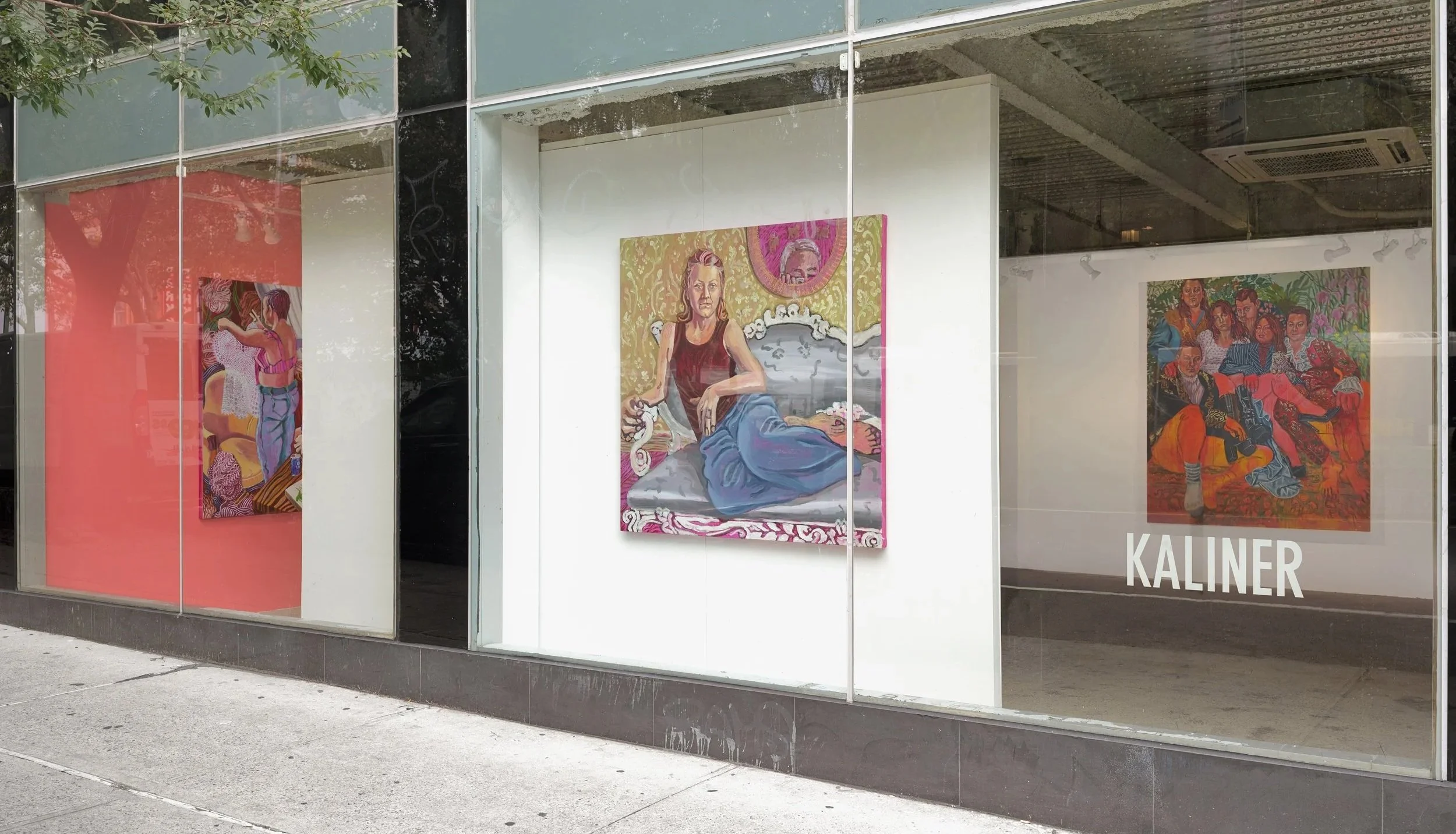
We are proud to present Barbara Ishikura’s second solo exhibition with KALINER - “Acquired Taste”. The exhibition brings together paintings that inhabit the space between refinement and irreverence. Drawing from the traditions of portraiture, genre painting, and decorative art, the works feature women who occupy their worlds with unapologetic ease. Layered with cultural references and symbolic details, the paintings unfold gradually, revealing complex relationships between identity, taste, and social expectation.
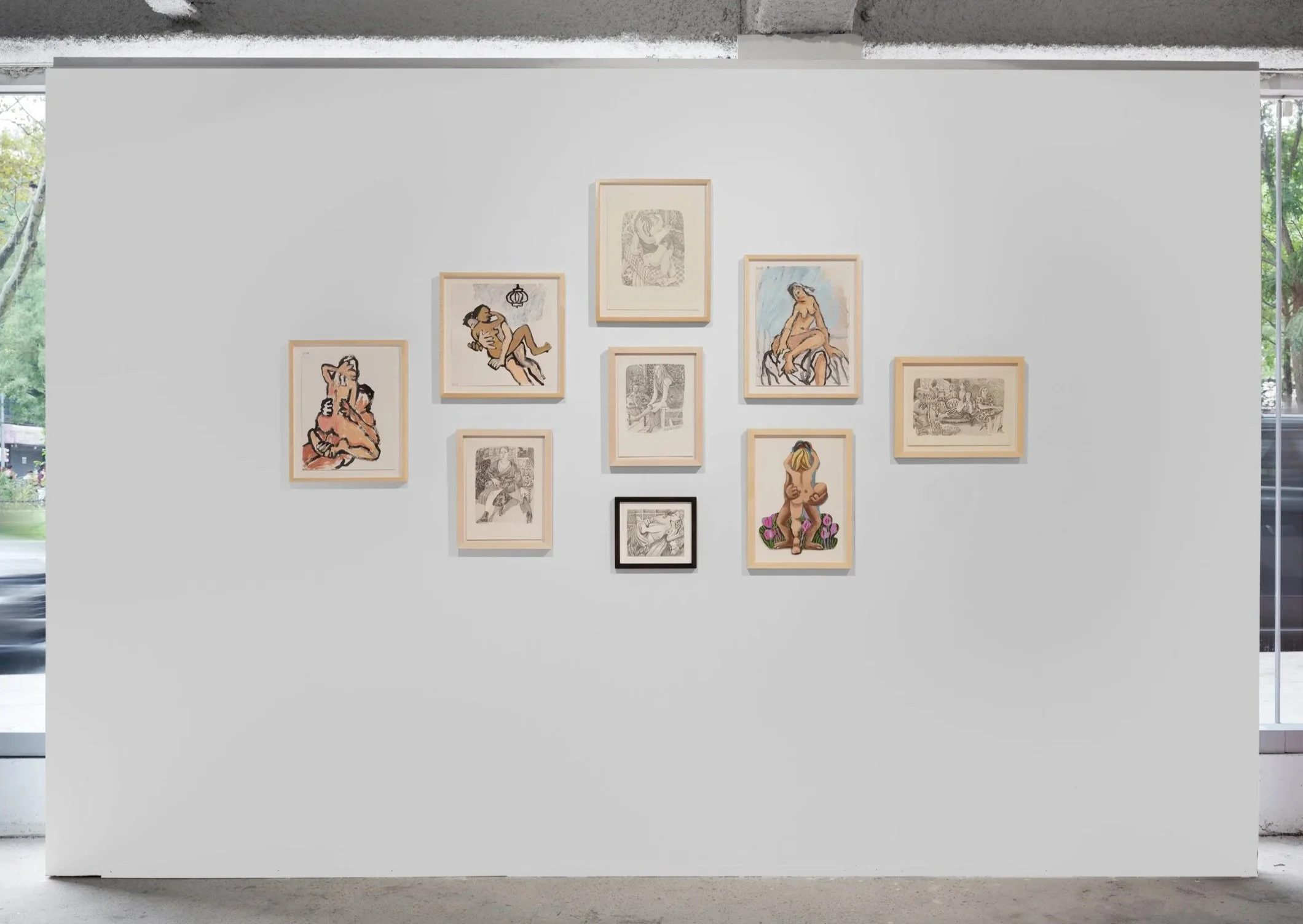
Classical poses, domestic interiors, and decorative spaces that once framed women as objects of contemplation in art history are re-occupied by contemporary subjects whose presence feels unruly. Rather than offering corrective images of womanhood, the paintings and drawings embrace ambiguity. Their subjects are neither heroines nor muses. They occupy the picture plane with the same complexity, excess, and inconsistency historically afforded to male subjects. Throughout the exhibition, familiar markers of luxury and taste—velvet upholstery, floral wallpaper, ornamental gardens, pearls, silks, and decorative textiles—collide with cigarettes, fishnets, sneakers, Solo cups, and other everyday objects. These encounters are not treated as contradictions to be resolved but as conditions to be embraced. The paintings resist hierarchies between the elegant and the vulgar, the cultivated and the commonplace, revealing taste itself as a social construction shaped by class, gender, and culture.
Textiles and ornament recur throughout the exhibition; they create densely layered environments that draw on both personal and cultural histories. Influenced by familial traditions of sewing and knitting, these materials function not simply as decoration but as records of labor, class, and identity. Their presence situates the paintings within a lineage of domestic craft while complicating conventional distinctions between fine art and ornament.
Animals appear throughout Ishikura’s paintings as expressions of a deep affinity for the natural world. Time spent volunteering on a farm and caring for animals strengthened this connection and continues to inform their presence in her work. Ishikura’s thinking is shaped by John Berger’s Why Look at Animals?, which considers the growing distance between human life and the animals that once existed in close proximity to it, and by Rebecca Solnit’s writing on the parallel domination of women and nature under patriarchal systems. Through animals, Ishikura introduces questions of empathy, interdependence, and stewardship, placing her figures within a shared living world rather than apart from it.
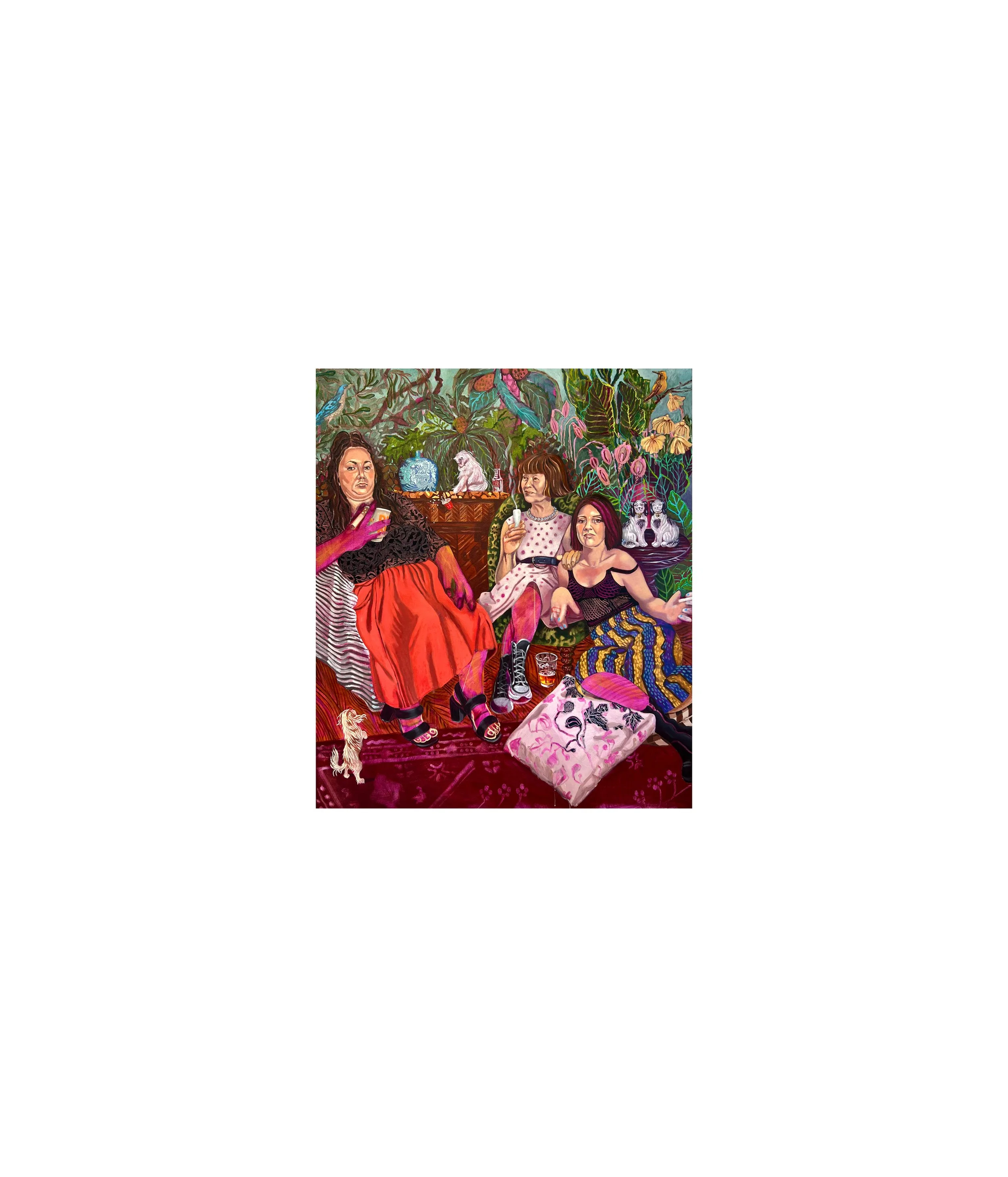
Barbara Ishikura, Queen, acrylic, oil, oil pastel, conté crayon on canvas, 70 x 60 in
The exhibition’s title, Acquired Taste, reflects Ishikura’s interest in the ways taste is learned, shaped, and socially constructed. Rather than being innate, taste develops over time and is often tied to class, cultural codes, and inherited hierarchies of value. This idea of gradual acquisition runs through Ishikura’s layered and meticulously detailed paintings, whose labor-intensive construction recalls knitting and embroidery. Like taste itself, these traditionally feminized practices are learned over time, revealing femininity not as a fixed identity but as something continually embodied, performed, and re-defined.
The title also proposes women themselves as an “acquired taste”, questioning who has the authority to determine who is desirable and worthy of attention. The women in Ishikura’s paintings, however, appear indifferent to these judgments; they are self-possessed, unbothered, and unconcerned with fitting into established hierarchies of taste. These women smoke, drink beer and coffee, lounge in gardens and parlors, and return the viewer's gaze without seeking approval.
Taken together, these works move between high and low culture, luxury and kitsch, performance and authenticity. They linger in the space where these categories blur, suggesting that value is never fixed but continually shaped through looking, context, and time. In this space, contradiction is not resolved but allowed to remain open. The exhibition invites viewers to consider taste itself as an ongoing process of negotiation rather than a stable measure of worth.
The exhibition is on view through October 3rd.